

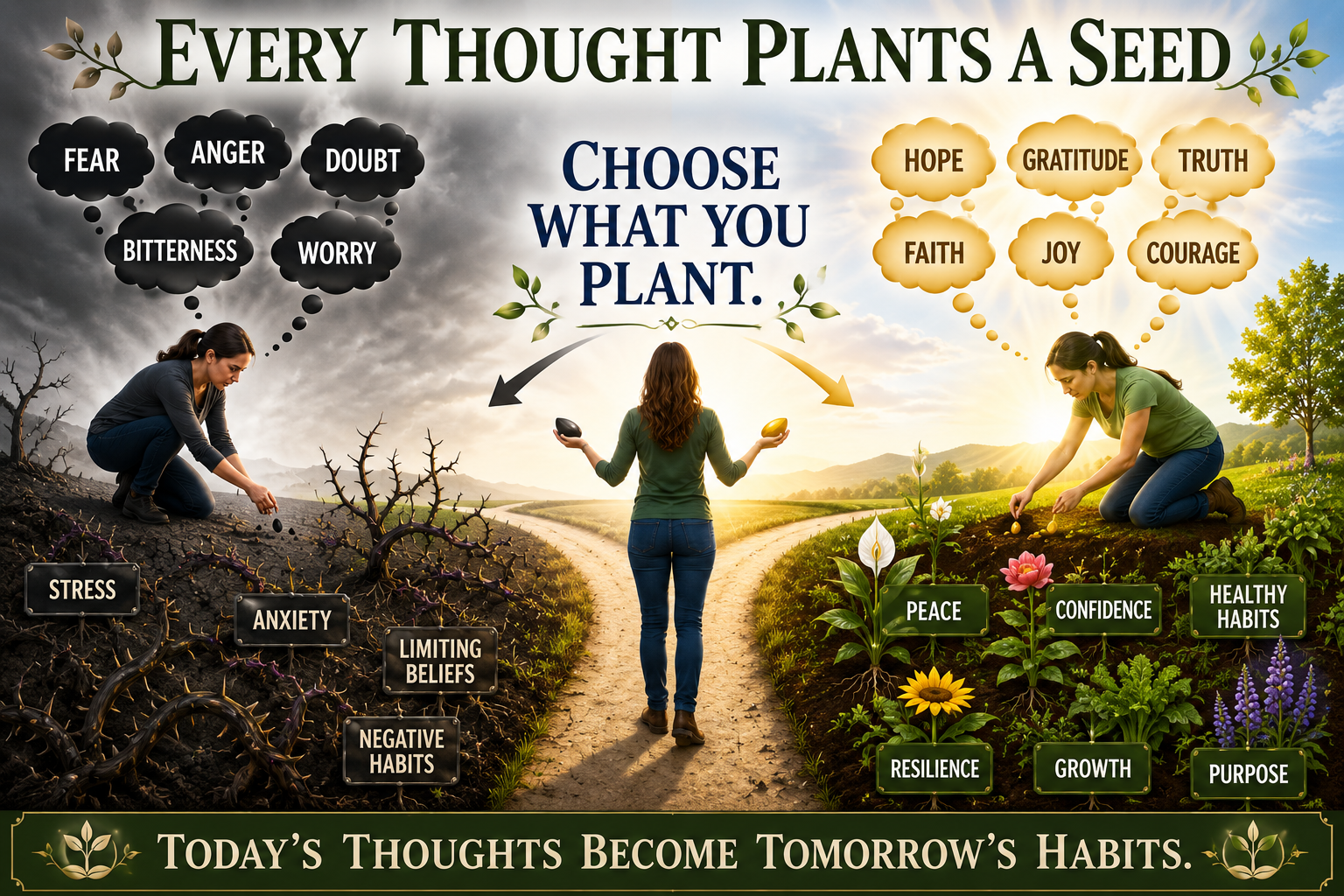
Our thoughts shape more than our outlook—they influence the habits, beliefs, and emotional patterns we develop over time. Think of every thought as planting a seed. Some seeds encourage growth, resilience, and hope. Others can reinforce fear, doubt, or limiting beliefs. Just as a gardener cannot expect healthy fruit from neglected weeds, we cannot consistently nurture negative thoughts and expect positive outcomes.
The encouraging news is that we are not powerless. Each day, the conscious mind has the opportunity to choose which thoughts receive our attention. Over time, those repeated thoughts can influence the automatic patterns that develop beneath conscious awareness. Modern neuroscience refers to this ability as neuroplasticity—the brain’s remarkable capacity to adapt and form new neural pathways through repeated experiences and intentional practice.
Awareness Is the First Step
Many of our thoughts occur so quickly that we barely notice them. This ongoing internal conversation—often called self-talk—can quietly shape our attitudes, emotions, and expectations. When we begin paying attention to that inner dialogue, we gain something incredibly valuable: The opportunity to choose a different response. Awareness creates the space between an automatic reaction and an intentional decision.
Replace, Don’t Just Remove
Simply trying to stop a negative thought or habit is rarely enough. Behavioral psychology suggests that lasting change is often more successful when an unwanted behavior is replaced with a healthier one rather than simply suppressed. Instead of focusing on what you don’t want to think, intentionally practice the thoughts, attitudes, and actions you want to become part of your daily life. Again it’s the case of small choices repeated consistently can gradually become new habits.
Pull the Weeds. Plant Something Better.
Every garden requires attention. If weeds are ignored, they naturally spread. Our thought life works much the same way. Negative thinking patterns can become stronger through repetition, while encouraging thoughts grow stronger when they are intentionally cultivated. This isn’t about pretending difficulties don’t exist. It’s about choosing responses that promote growth rather than allowing destructive patterns to take deeper root.
Your Mind Can Learn New Patterns
The brain is designed to learn. With consistent awareness, repetition, healthy habits, supportive relationships, prayer or meditation, and intentional practice, new ways of thinking can become increasingly natural over time. The seeds you plant today influence the harvest you experience tomorrow.