

The nutrient gap isn’t caused by a single factor. It often develops gradually through everyday patterns such as relying on highly processed foods, eating fewer fruits and vegetables, chronic stress, digestive challenges, aging, and increased nutritional demands.
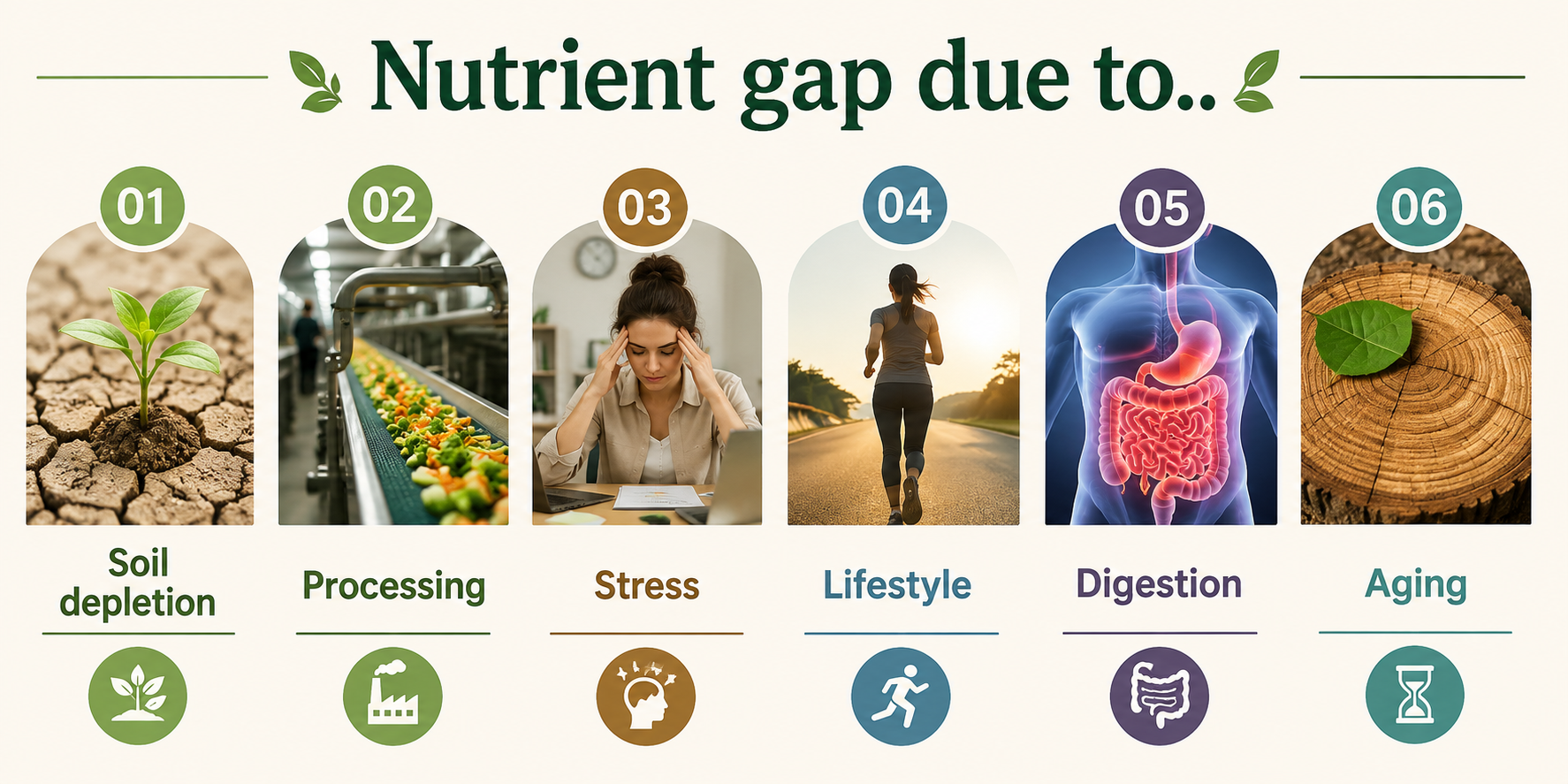
Research also suggests that some fruits, vegetables, and grains contain lower levels of certain vitamins and minerals than similar crops grown decades ago. Modern crop varieties, farming practices, harvesting and storage methods, food processing, and today’s fast-paced lifestyles can all contribute to nutritional gaps.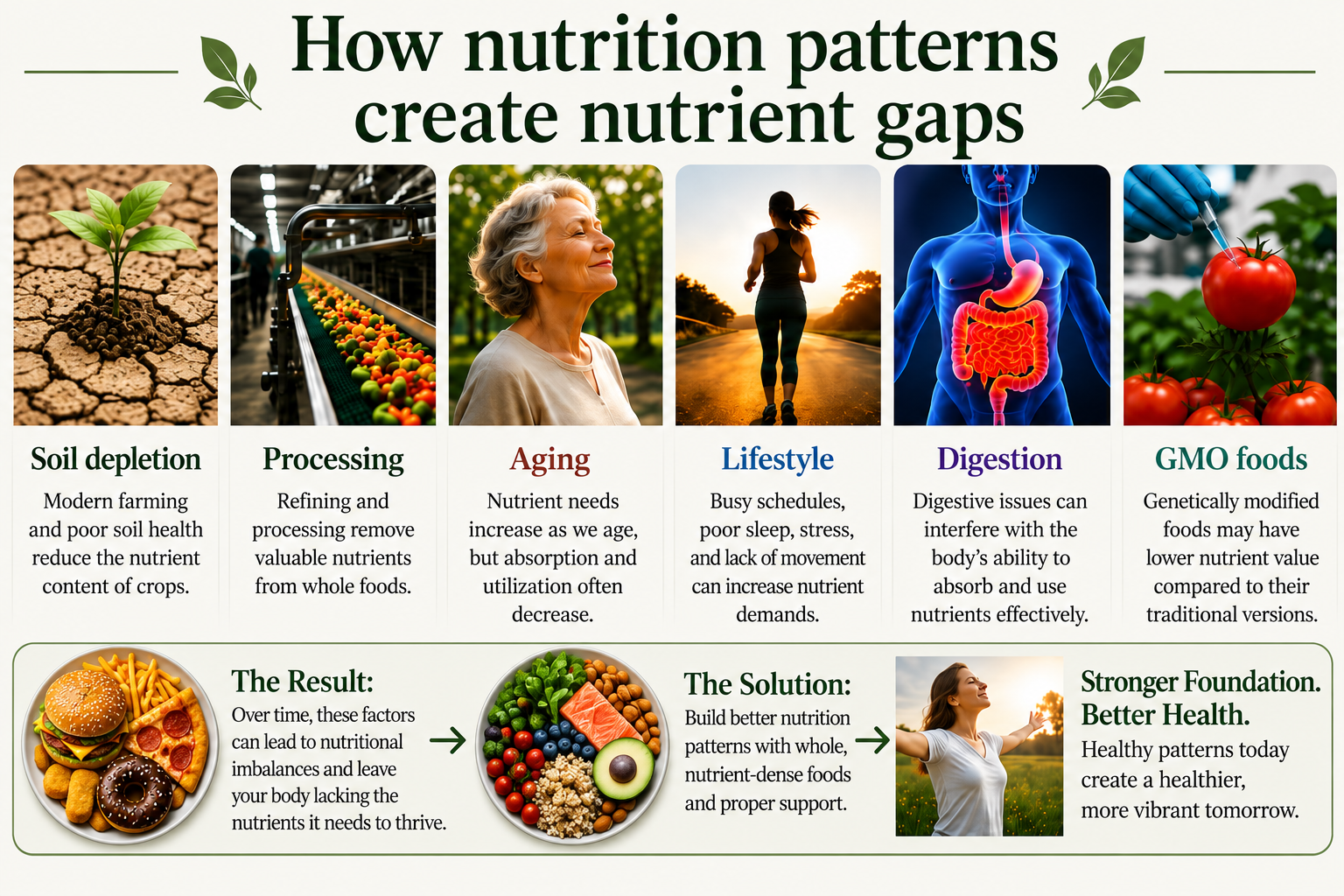
Are You Absorbing What You Eat?
Eating nutritious food is important, but it does not always mean your body is absorbing and using every nutrient. This can also contribute to nutrient gaps. Digestive challenges, chronic stress, poor sleep, aging, certain medications, and heavily processed foods can interfere with digestion and nutrient absorption or increase the body’s nutritional needs. Supporting healthy digestion and addressing these hidden nutrient drainers can help your body receive more benefit from the foods you eat.

There are some the areas of the Hidden Nutrient Drainers can not be changed. But there are still some to pick from. Identify one of those and take one small step to work on for the next 7 days.
Overcoming the Gaps
Even with thoughtful eating patterns, meeting all of our nutritional needs every day can sometimes be challenging. Quality supplements can complement a nutrient-dense diet by providing additional nutritional support where gaps may exist.
Our journey next explores how quality supplements can help fill the nutrient gaps and strengthen our nutritional foundation.
The Role of Quality Supplements →
Pingback: Building Healthy Nutrition Patterns - PathFinders Natural Healthy Solutions
Pingback: Supplements Support- They Don’t replace - PathFinders Natural Healthy Solutions