

What Is Total Body Analysis?
Every wellness journey begins with understanding where you are today. You may recognize that something does not feel quite right, yet still be uncertain about which patterns deserve attention or where to begin making changes.
Total Body Analysis, commonly called TBA, offers a structured starting point for exploring those questions.
TBA is a gentle, non-invasive wellness process developed by Dr. Reuben T. DeHaan. It uses a structured form of kinesiology—often called muscle-response testing—to explore patterns of stress that may be influencing a person’s overall well-being. Rather than looking at one concern in isolation, TBA considers the body as an interconnected system. Nutrition, lifestyle, physical strain, emotional stress, environmental influences, and past experiences may all become part of the conversation.
How TBA Works
The body and nervous system are continually responding to information from both internal and external sources. Kinesiology uses changes in muscle response as a form of practitioner-guided feedback while a specific testing protocol is followed.
During a TBA session, the practitioner uses specialized testing vials representing different areas of wellness inquiry. At PathFinders, the vial collection includes testing vials provided through Dr. DeHaan’s TBA system as well as bioenergetic testing vials from Ergopathics Canada. The vials we use contain water and alcohol that serve as bioenergetic representations of the items identified on their labels. They do not contain the actual substances named on those labels.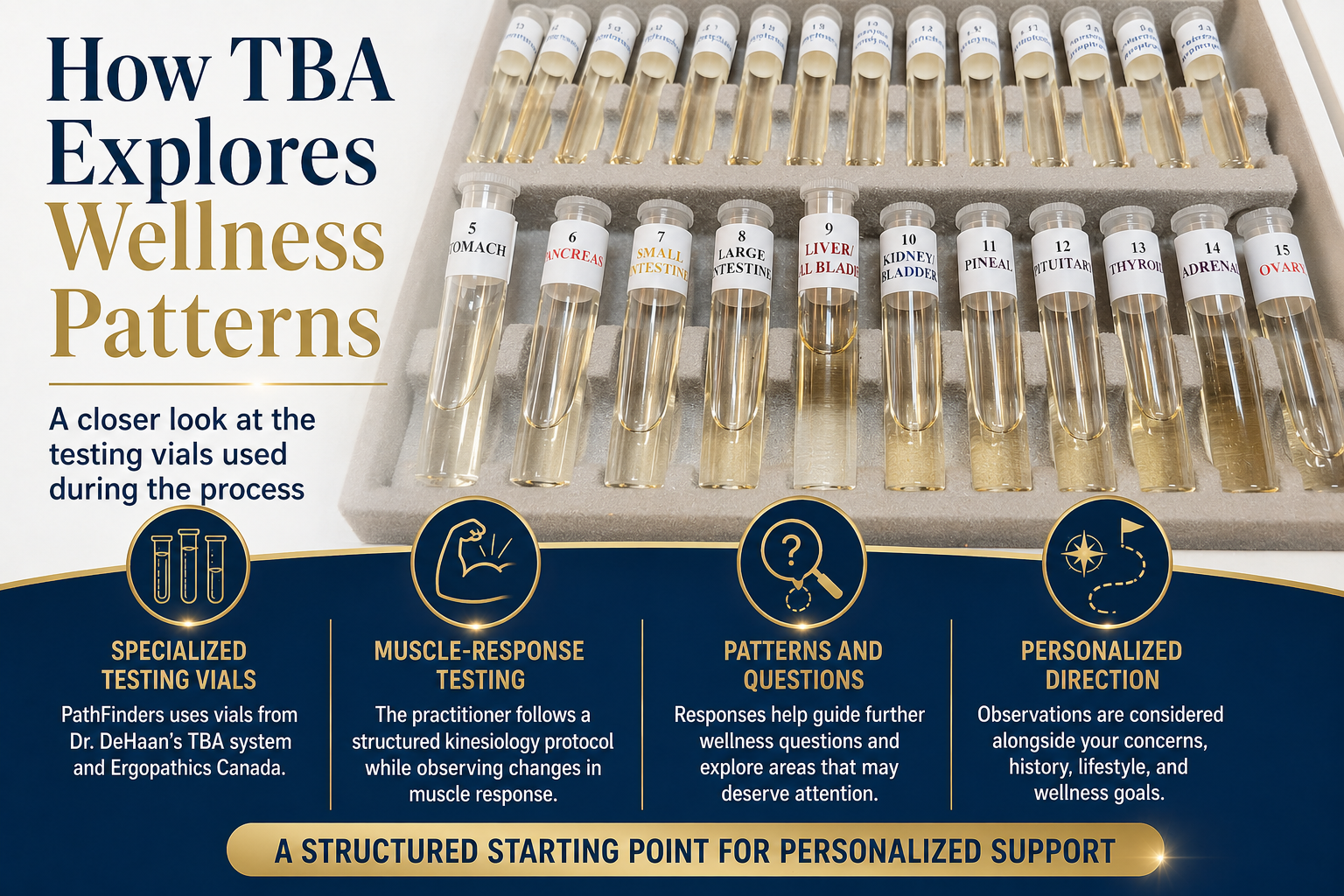
By observing muscle responses while working through the TBA protocol, the practitioner gathers information that may help:
- Guide further wellness questions
- Explore possible patterns of stress
- Identify areas that may deserve additional attention
- Consider supportive nutrition and lifestyle strategies
- Develop a more personalized path forward
TBA findings are considered alongside the information you provide about your health history, lifestyle, current concerns, and personal wellness goals. The process is not intended to reduce a person to a set of results. It provides another perspective that can help guide a thoughtful and individualized wellness conversation.
Looking Beyond the Immediate Concern
Symptoms and concerns can provide important clues, but they do not always tell the whole story. Similar concerns may be influenced by very different factors in different people. This is one reason a generic, one-size-fits-all approach may not provide the direction an individual needs.
TBA is designed to help explore the broader picture rather than focusing exclusively on the most noticeable concern. Depending on the individual, areas of inquiry may include nutrition, lifestyle habits, physical stress, emotional strain, environmental influences, or other patterns affecting overall wellness. The purpose is not to make assumptions or promise a particular outcome. It is to ask better questions, recognize possible connections, and determine which practical next steps may be appropriate.
Turning Information Into Direction
TBA does not diagnose disease, confirm nutritional deficiencies, identify infections or pathogens, prescribe treatment, or replace laboratory testing and professional medical care. The testing vials are used for wellness inquiry—not as scientifically validated diagnostic tools. Instead, TBA provides a structured way to explore patterns, organize observations, and identify areas that may deserve further attention. The information gathered can help guide conversations about supportive options such as:
- Nutrition education
- Healthy lifestyle changes
- Stress-support practices
- Essential oil recommendations
- Carefully selected wellness products
- Ongoing coaching, accountability, and encouragement
Any recommendations are considered within the appropriate scope of wellness education and alongside qualified medical care when needed. Sometimes the hardest part of making a change is knowing where to begin. TBA offers a personalized starting point for exploring your concerns, recognizing possible patterns, and considering practical next steps.
At PathFinders, our role is to listen, guide, educate, and encourage. We help you consider the information available and make informed choices that align with your individual circumstances and wellness goals.
Our goal is to help you uncover useful clues that can guide your path forward—one informed choice and one healthier pattern at a time.