

Created to Work as One
Lasting emotional wellness begins with understanding the remarkable connection between the brain, mind, and body. Although each has a unique role, they function as one integrated system—constantly communicating through thoughts, emotions, memories, hormones, nerves, and life experiences. This ongoing communication influences how we think, feel, respond to challenges, build habits, and experience overall well-being.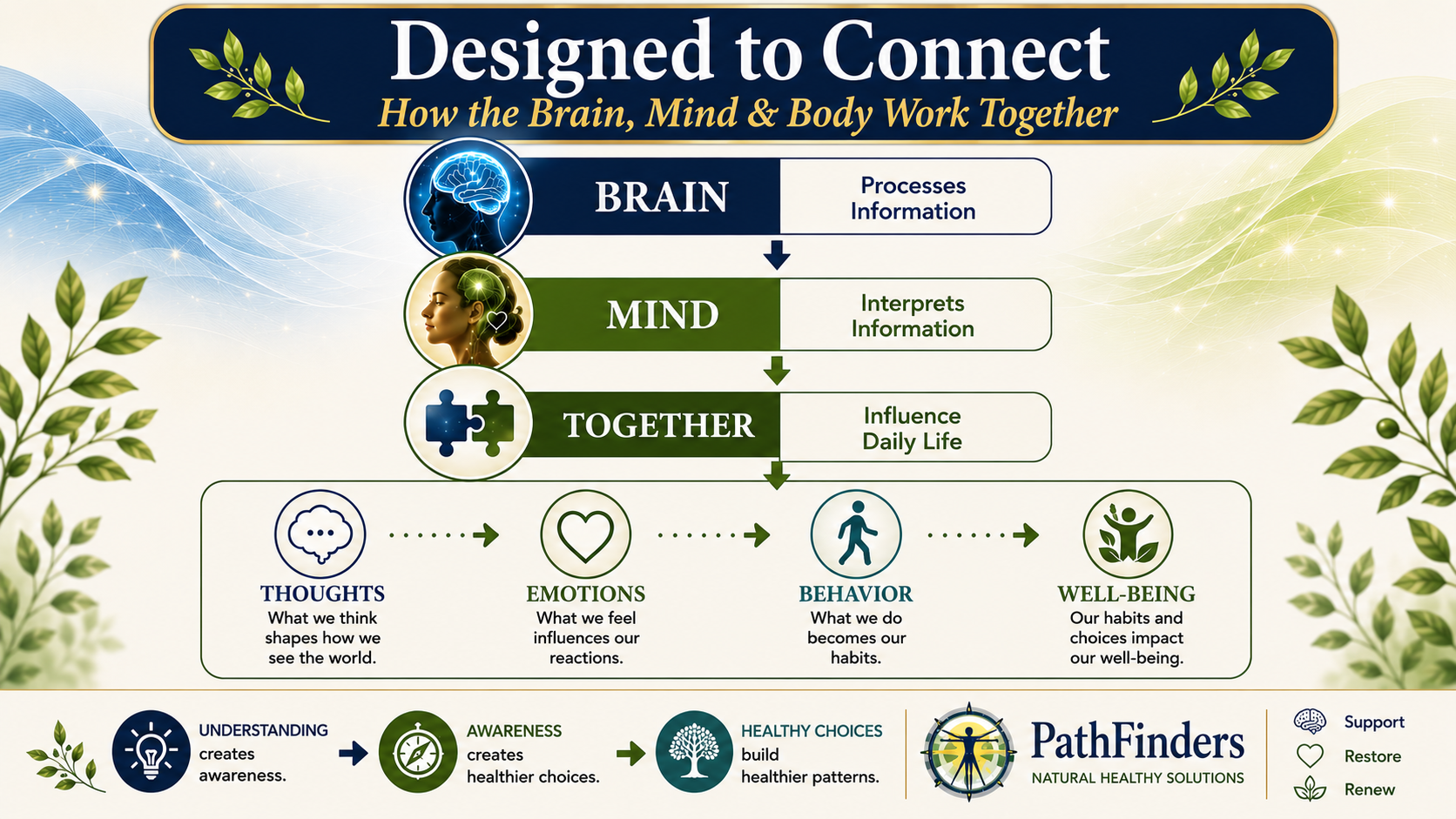
The brain is the body’s communication center. Made up of billions of nerve cells, it receives information, processes it, stores memories, and coordinates countless functions throughout the body. Every thought, movement, emotion, and decision depends on this remarkable network of communication.
The mind is how we experience life. It includes our thoughts, beliefs, emotions, imagination, attitudes, memories, and the choices we make each day. While the mind depends on the brain to function, it reflects how we interpret the world around us and respond to life’s experiences.
Working together, the brain and mind continually influence the body. Our experiences shape our thoughts, our thoughts influence our emotions, and repeated thoughts and behaviors gradually become familiar patterns. In the same way, healthy habits—including meaningful relationships, good nutrition, quality sleep, regular movement, and effective stress management—help support healthy brain function and emotional well-being.
Understanding this remarkable partnership is the foundation for everything that follows. As you continue through this section, you’ll discover how this communication system influences the way we think, feel, and respond—and how greater awareness can help us build healthier patterns that support lasting wellness.
Two Minds, One Purpose
How Does the Mind Work?
Have you ever wondered why some actions require careful thought while others seem to happen automatically?
Although we often think of the mind as a single entity, psychologists commonly describe it as involving two closely connected systems: the conscious mind and the subconscious mind. Each serves a unique role, yet together they influence how we think, learn, feel, and respond to life’s experiences.
The Conscious Mind
The conscious mind is the part of your thinking you are aware of in the present moment. It allows you to observe your surroundings, solve problems, make decisions, and intentionally choose your responses. Closely connected is the preconscious mind, which stores information that isn’t currently in your awareness but can be easily recalled, such as a name, memory, or learned skill.
The conscious mind acts as a gatekeeper, directing our attention toward what we are learning, thinking about, and choosing each day. It is where we evaluate new ideas, practice new skills, and make intentional decisions. What we repeatedly focus on today can gradually influence the deeper habits and thought patterns we develop over time.
The Subconscious Mind
The subconscious mind works quietly behind the scenes, managing much of what happens automatically each day. It stores memories, learned behaviors, emotional associations, and habits, allowing us to perform familiar tasks without consciously thinking through every step.
From driving a familiar route to recognizing a friend’s face or responding emotionally to a familiar situation, the subconscious helps make daily life more efficient. Many of these automatic responses began as conscious actions. Through repetition and experience, they gradually became familiar patterns that no longer require deliberate thought, allowing the brain to conserve energy and respond quickly to everyday situations.
Working Together Every Day
Rather than competing with one another, the conscious and subconscious mind function as partners. The conscious mind helps us learn, evaluate, and make intentional choices, while the subconscious stores those repeated experiences and gradually transforms many of them into familiar habits and automatic responses.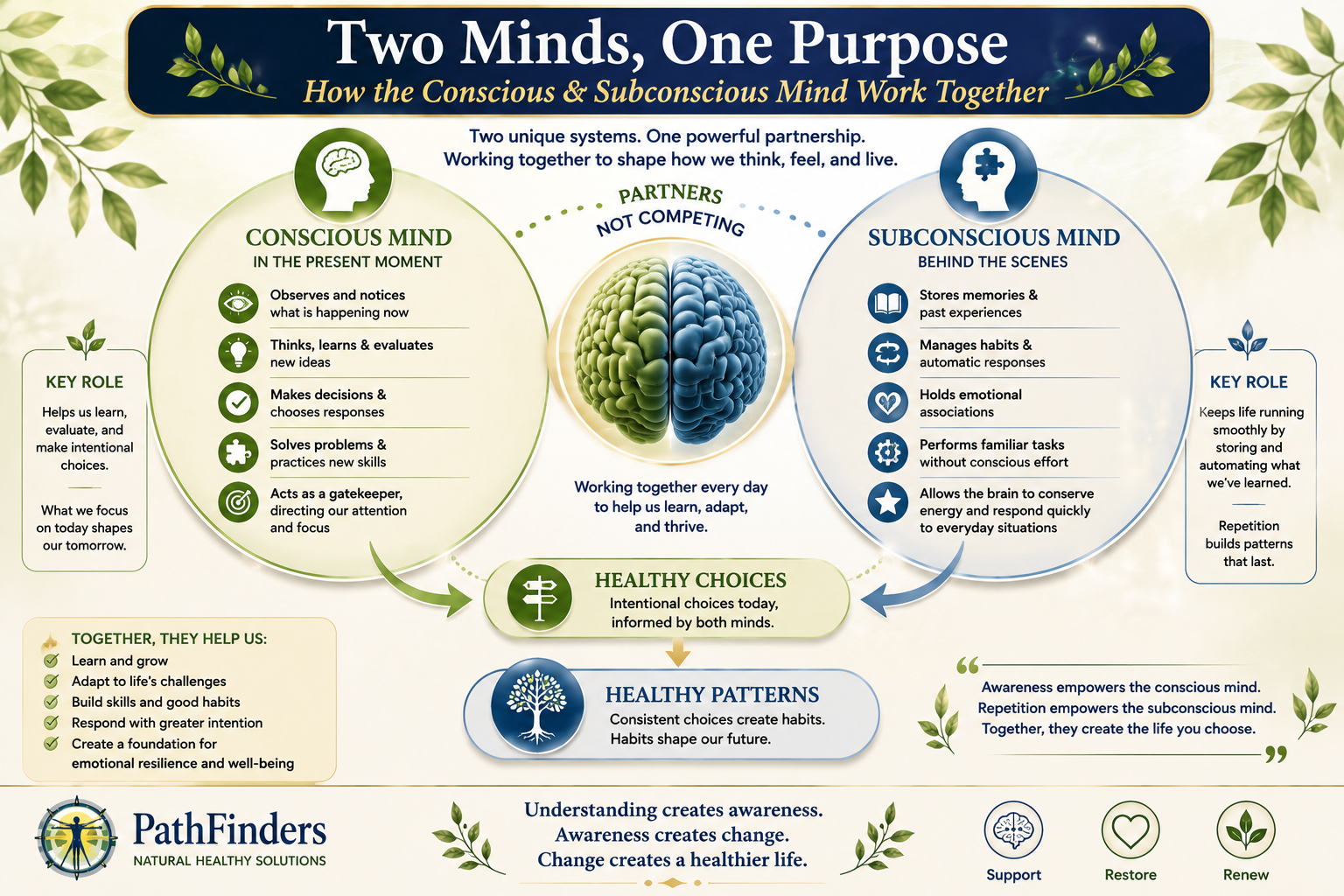 This remarkable partnership allows us to adapt, develop new skills, and build patterns that shape how we think, feel, and respond throughout life. Skills that once required careful concentration—such as reading, driving, typing, or playing an instrument—can eventually become second nature through repeated practice.
The encouraging news is that this partnership continues throughout life. As we become more aware of our thoughts, choices, and daily habits, we gain greater opportunity to strengthen patterns that support emotional resilience and lifelong well-being.
The Brain & Body Communication Network
One Connected Communication System
By now we’ve seen that the brain and mind work together as remarkable partners. Their influence, however, doesn’t stop with our thoughts and emotions. Every second, your brain and body are exchanging an extraordinary amount of information, allowing countless systems to work together in harmony.
The brain serves as the body’s communication center. It continually receives information from every part of the body, interprets those signals, and sends instructions back. This ongoing two-way communication helps regulate movement, balance, breathing, digestion, heart rate, hormone activity, emotions, memory, sleep, and many other essential functions that keep us functioning each day.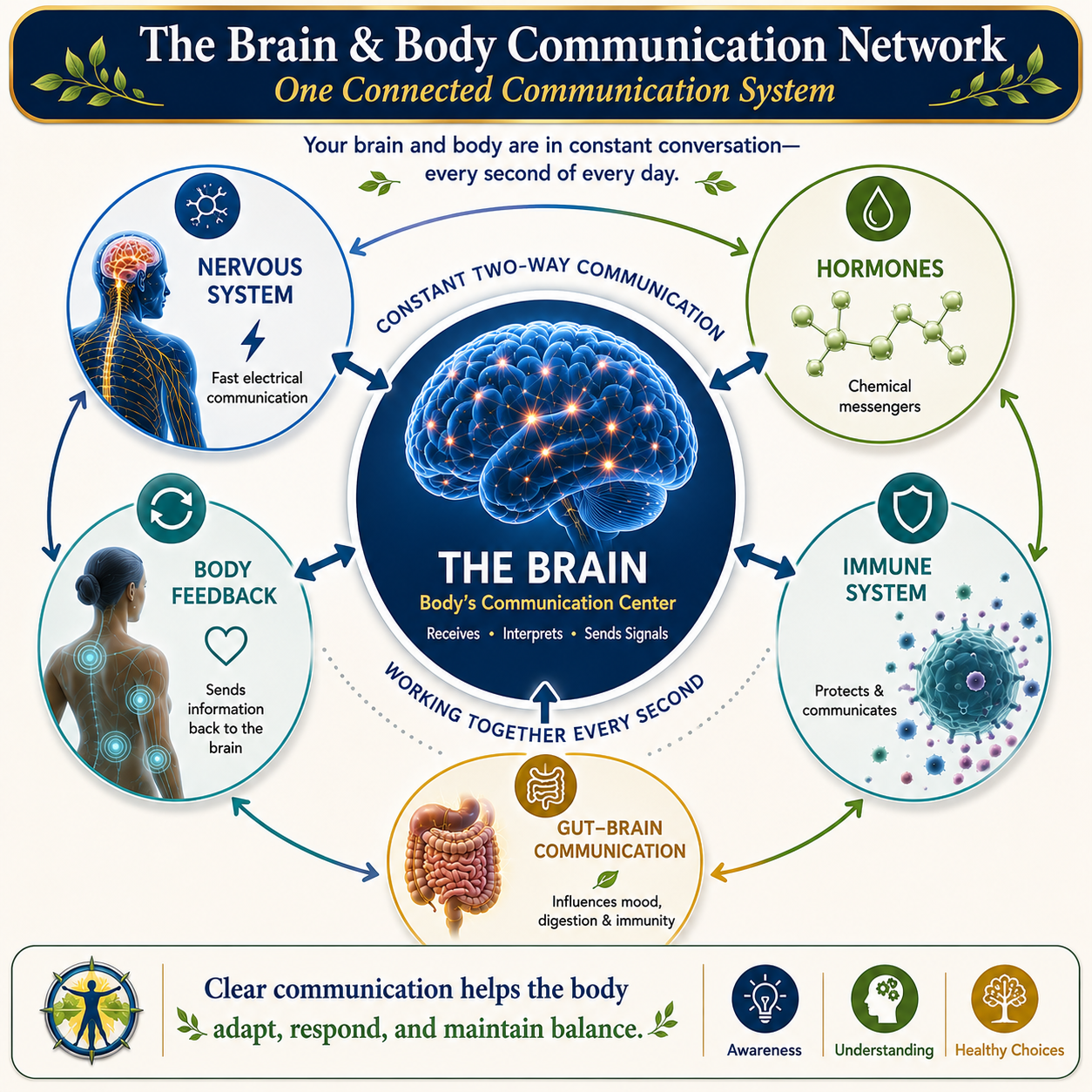
This remarkable communication occurs primarily through two interconnected systems. The nervous system rapidly carries electrical signals through the brain, spinal cord, and millions of nerves that reach virtually every part of the body. At the same time, hormones travel through the bloodstream as chemical messengers, helping coordinate activities throughout the body’s organs and systems. Working together, these communication networks help regulate everything from movement, digestion, circulation, and immune function to memory, emotions, healing, and sleep.
Communication doesn’t flow in only one direction. The body is constantly sending information back to the brain. Every sensation, movement, change in temperature, level of pain, emotion, and internal body function provides valuable feedback that allows the brain to continually monitor conditions, make adjustments, and help maintain normal function. This continuous exchange enables the body to adapt to changing circumstances while maintaining balance.
Because every system depends on clear communication, changes anywhere along these pathways can influence how we think, feel, and function. Physical health can influence emotional well-being, just as our thoughts and emotions can affect the body. Recognizing this ongoing conversation helps us better understand why whole-person wellness involves caring for both the mind and the body.
Why This Matters
Every thought, emotion, experience, and physical sensation becomes part of an ongoing conversation between your brain, mind, and body. When these communication systems work together efficiently, they support learning, adaptation, resilience, and overall well-being.
Because every system depends on healthy communication, anything that disrupts these pathways can influence how we think, feel, and function. One of the greatest influences on this remarkable communication network is stress.
Understanding how stress affects this system is the next step in understanding emotional wellness.
Pingback: Pillar 1: Understand - PathFinders Natural Healthy Solutions