

When Stress Quietly Influences the Brain & Body
Your brain and body are designed to communicate with one another every moment of every day. Through the nervous system, hormones, and other chemical messengers, information continually travels throughout the body, helping us respond and adapt to the world around us.
Stress is part of that natural response system. In short periods, stress can be helpful. It can increase alertness, sharpen our focus, and prepare the body to respond when action is needed. Once the challenge has passed, the body is designed to gradually return to a more balanced state.
When Stress Lasts Too Long
The challenge occurs when stress becomes ongoing. Instead of regularly returning to periods of rest and recovery, the brain and body may remain focused on responding to continual demands. And stress isn’t always obvious. Busy schedules, ongoing responsibilities, difficult relationships, poor sleep, uncertainty, environmental influences, and even the pressures we place on ourselves can quietly add to the body’s overall stress load.
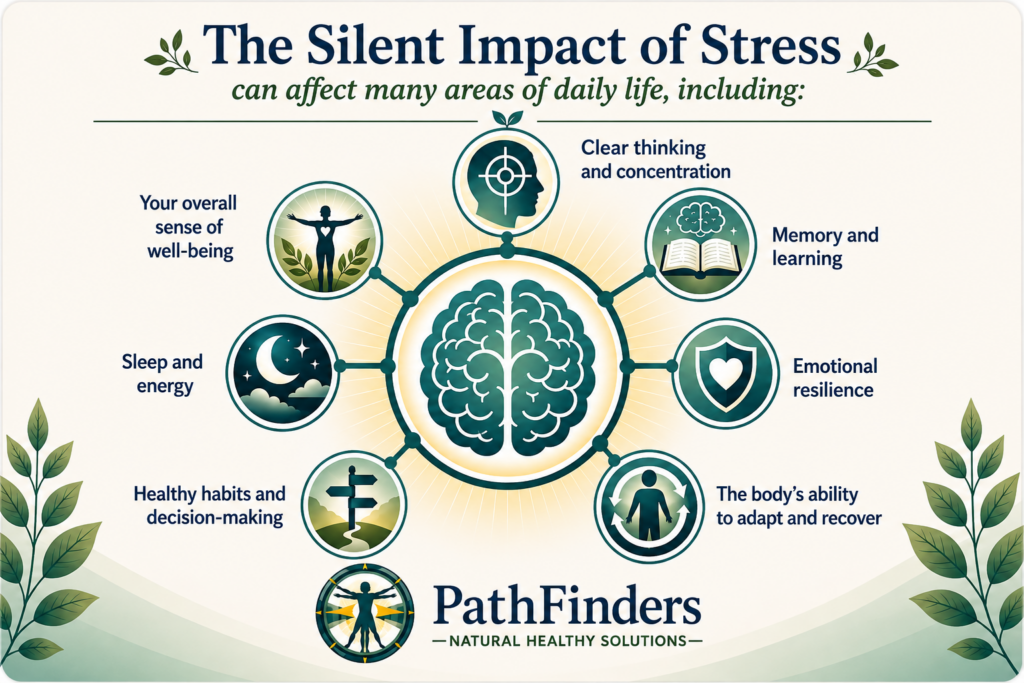
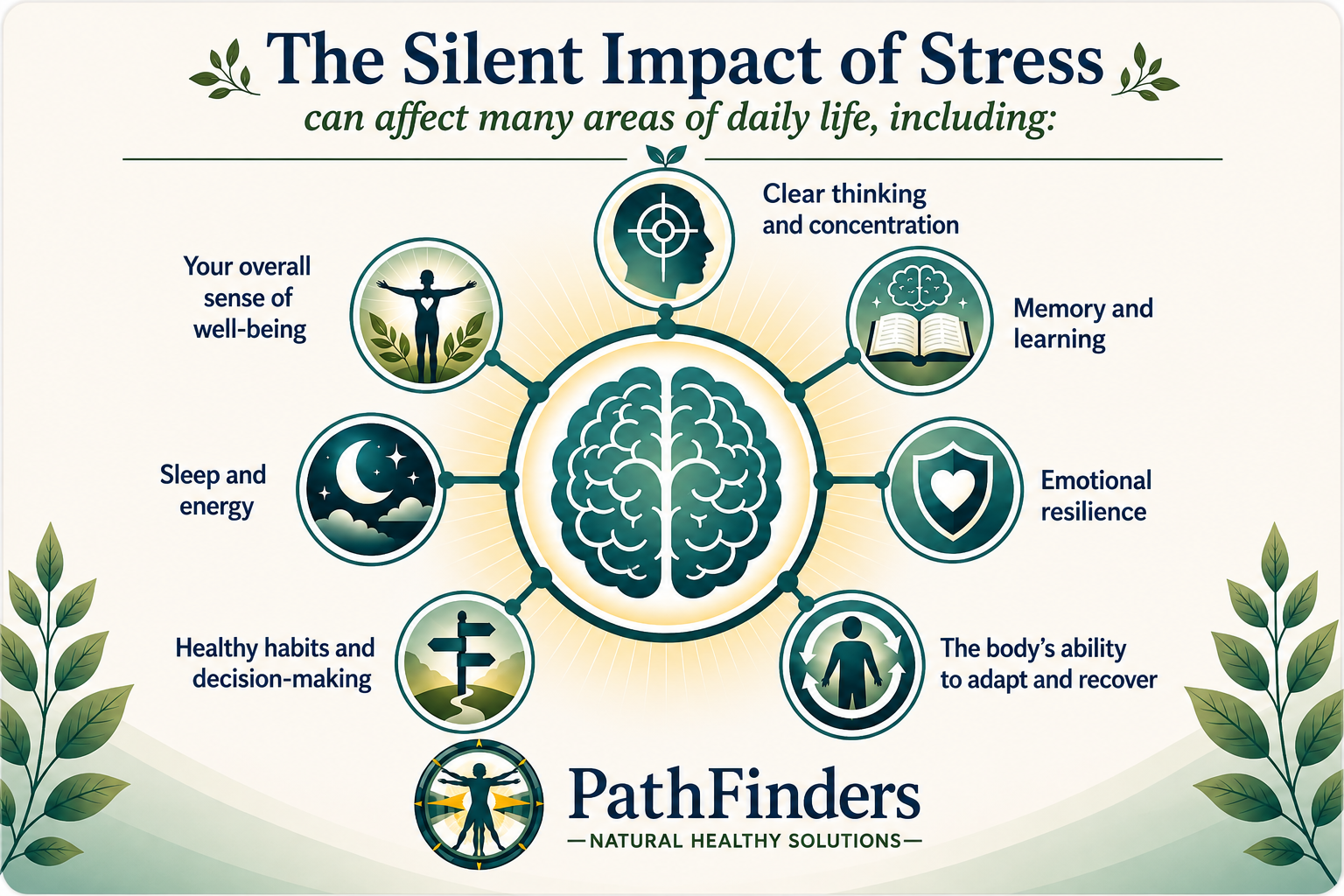
Over time, prolonged stress can influence many areas of daily life, including:
- Clear thinking and concentration
- Memory and learning
- Emotional resilience
- Sleep and energy
- Healthy habits and decision-making
- The body’s ability to adapt and recover
- Our overall sense of well-being
This is why stress can sometimes feel like a silent influence. We may notice changes in our energy, patience, concentration, sleep, or emotional responses without immediately recognizing the accumulated stress that may be contributing to them.
Awareness Creates Opportunity
Stress may be unavoidable, but becoming more aware of the pressures influencing us gives us an opportunity to respond differently. Recognizing where stress is coming from, allowing adequate time for rest and recovery, supporting healthy daily routines, and becoming more intentional about how we respond to life’s demands can help support greater resilience and balance.
Understanding stress isn’t about eliminating every challenge from life. It’s about recognizing how ongoing stress may be influencing the way the brain and body work together so we can make more informed choices about our well-being.
Hope Beyond Stress
Perhaps one of the most encouraging discoveries about the brain is that it isn’t fixed. Throughout life, the brain continues to adapt and reorganize in response to what we experience, learn, and repeatedly practice. This remarkable ability means the patterns influenced by our experiences don’t necessarily have to remain the same.
Our next step on the journey explores this remarkable capacity for change and the hope it offers for developing healthier patterns:
Neuroplasticity — Your Brain’s Amazing Ability to Change →