

- Why do certain health concerns seem to run in families?
- Why can two people with similar genetic backgrounds experience very different health outcomes?
Part of the answer lies in understanding the relationship between genetics and epigenetics. Our genes influence many aspects of health, but they rarely tell the whole story. Nutrition, physical activity, stress, rest, environmental exposures, age, and other life experiences may interact with our genetic makeup throughout life. This helps explain why our DNA can influence our health without necessarily determining our future.
Genetics: The Instructions We Inherit
DNA is the biological information passed from parents to children. Sections of DNA called genes provide instructions that help the body produce proteins, maintain tissues, regulate body processes, and carry out countless everyday functions. A helpful way to picture DNA is as an extensive instruction library. Each gene represents a particular set of instructions, while variations in those instructions help make each person unique.
Some genetic variations have little or no effect on health. Others influence characteristics such as eye color, how the body processes certain nutrients or medications, or susceptibility to particular health conditions. A small number of conditions are closely connected to a change in a single gene. However, many common concerns—including heart disease, type 2 diabetes, obesity, and some cancers are multifactorial. This means that several genes may be involved, along with lifestyle and environmental influences. (medlineplus.gov)
A genetic predisposition, therefore, is not always a prediction. It may indicate that a person has an increased susceptibility, but it does not necessarily mean that the condition will develop.
Epigenetics: How the Instructions Are Used
Nearly every cell in the body contains essentially the same DNA, yet a muscle cell behaves differently from a nerve or bone cell. One reason is that each cell uses only the genetic instructions it needs.
This is where epigenetics comes in. Epigenetics is the study of changes that help regulate gene activity without changing the underlying DNA sequence. The epigenome includes chemical markers associated with DNA and its supporting proteins. These markers help influence whether certain genes are more active, less active, or inactive in a particular cell. (medlineplus.gov) If DNA is the instruction library, the epigenome acts somewhat like a system of bookmarks, notes, and dimmer switches. It helps the body determine:
- Which instructions are needed
- Where they are needed
- When they should be used
- How actively they should be read
Epigenetic activity is a normal and necessary part of growth, development, tissue function, and aging. It is not automatically good or bad.
Where Lifestyle and Environment Fit In
The epigenome is responsive. Diet, physical activity, tobacco smoke, pollution, chemicals, stress, and other environmental or lifestyle influences have been associated with changes in epigenetic patterns. Scientists are studying how these changes may affect gene activity and contribute to health or disease. (niehs.nih.gov)
This does not mean that every lifestyle choice directly turns a particular gene on or off, or that people can control all genetic risks through positive thinking, food, exercise, or supplements. Epigenetics is far more complex than a simple switch, and researchers are still learning which changes are meaningful, how long they last, and whether they directly cause particular health outcomes. What the science does show is that health develops through an ongoing interaction among:
- The DNA we inherit
- Normal development and aging
- Our physical and social environments
- Everyday habits and exposures
- Personal and family health history
These influences do not act independently. They continually interact, helping shape how the body functions over time.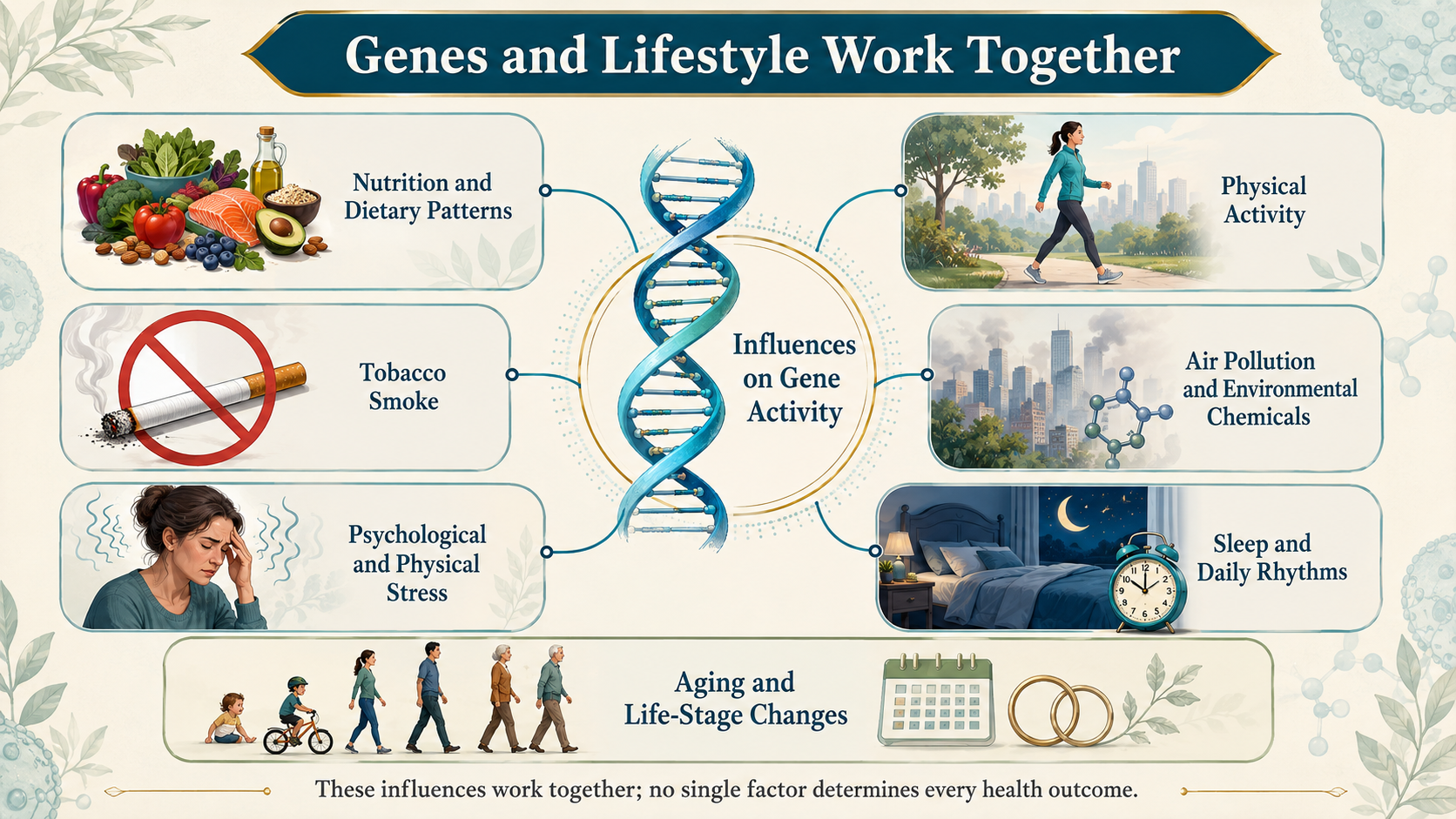
Genetics Is Not Always Destiny
Knowing that a health condition runs in your family can feel discouraging, but family history is best viewed as useful information—not a final outcome. Family members may share genes, but they may also share eating patterns, activity levels, living environments, cultural traditions, and sources of stress. This is why family health history provides information about more than DNA alone. (CDC) Understanding family patterns may help you and your healthcare provider make more informed decisions about:
- Appropriate health screenings
- When certain screenings should begin
- Questions to ask about genetic counseling
- Health patterns that may deserve greater attention
- Practical lifestyle changes that support overall well-being
Healthy choices cannot guarantee that a condition will be prevented, and illness should never be interpreted as a personal failure. However, nutrition, movement, rest, stress management, avoiding tobacco, and reducing harmful exposures remain meaningful ways to support health—regardless of genetic background.
A More Complete Picture of Health
Genetics gives us part of the story. Epigenetics helps explain how the body reads and responds to that information within the circumstances of everyday life. Together, they offer a more complete view: we inherit certain biological tendencies, but our health is also shaped by patterns, experiences, surroundings, and the support available to us.
You cannot rewrite the DNA you were born with, but you can become more aware of your family history, ask better questions, and make informed choices that support your body. The goal is not to control every outcome. It is to work thoughtfully with the information you have and take practical, consistent steps toward greater well-being.
This information is intended for general education and is not a substitute for medical care. Questions about inherited conditions, genetic testing, or personal health risks should be discussed with a qualified healthcare provider or genetic counselor.
Follow-Up Resources
General information
- What Is Epigenetics? — MedlinePlus Genetics
A clear introduction to how epigenetic changes regulate gene activity. - Epigenomics Fact Sheet — National Human Genome Research Institute
An accessible explanation of the epigenome and its relationship to DNA. - What Are Complex or Multifactorial Disorders? — MedlinePlus Genetics
Explains how genes, lifestyle, and environmental factors may work together. - About Family Health History — Centers for Disease Control and Prevention
Practical guidance for collecting and using family health information.
For readers who want to go deeper
- Environmental Epigenetics — National Institute of Environmental Health Sciences
An overview of current research into environmental exposures, gene regulation, and health. - Genetics — MedlinePlus
A broad educational library covering DNA, genes, inheritance, genetic conditions, and testing. - Epigenetic Modifications of Gene Expression by Lifestyle and Environment — PubMed
A scientific review discussing possible relationships among nutrition, environmental factors, and epigenetic regulation.