

Our bodies are remarkable. From the intricate instructions written into our DNA to the trillions of cells working together every day, every part reflects incredible design and purpose. Scripture reminds us that we are “fearfully and wonderfully made” (Psalm 139:14), inviting us to see our bodies not as accidents, but as gifts entrusted to our care. Biblical stewardship is the wise management of something that belongs to another. While our lives are uniquely our own, Scripture teaches that our bodies are also gifts from God. Caring for them is one practical way of expressing gratitude, responsibility, and respect for the One who created us. This perspective moves self-care beyond appearance or personal achievement. Instead, it becomes an act of faithful stewardship—making choices that help us live with greater health, strength, and purpose so we can better serve God and others.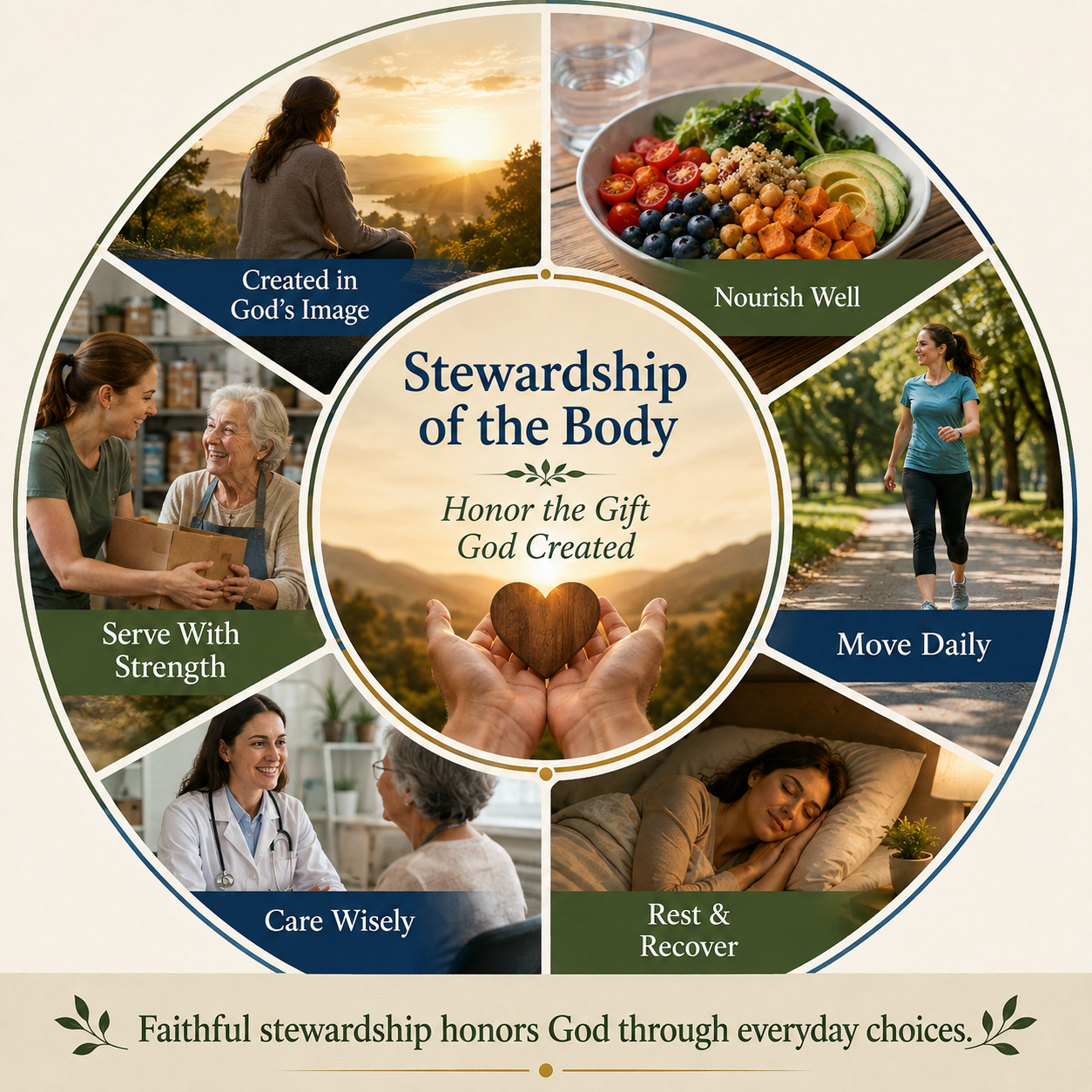
Caring for the Body God Created
God designed the human body with an extraordinary ability to grow, adapt, repair, and respond to its environment. Although we cannot control every aspect of our health, many of our daily choices influence how well our bodies function over time. Healthy stewardship includes patterns such as:
- Eating nourishing foods.
- Staying physically active.
- Prioritizing sleep and recovery.
- Managing stress in healthy ways.
- Caring for our emotional well-being.
- Seeking appropriate medical care when needed.
- Avoiding habits that unnecessarily harm the body.
These choices do not earn God’s love, nor do they guarantee perfect health. Rather, they are practical expressions of gratitude for the gift of life He has entrusted to us.
Stewardship Begins with Gratitude
When we recognize the remarkable way God designed the human body—from our DNA and cells to the intricate systems that sustain life—we naturally move from taking our health for granted to appreciating it as a gift. Stewardship asks a simple question:
“How can I best care for what God has entrusted to me?”
For some, that may mean choosing healthier foods. For others, it may mean taking time to rest, seeking support during difficult seasons, becoming more physically active, or addressing long-neglected habits one small step at a time. The goal is not perfection. It is faithful stewardship through consistent choices that honor God and support whole-person wellness.
“Do you not know that your bodies are temples of the Holy Spirit… Therefore honor God with your bodies.”
1 Corinthians 6:19–20
From Stewardship to Worship
Caring for what God has entrusted to us helps us recognize His wisdom, provision, and goodness. As that awareness grows, our response moves beyond simply caring for His gifts toward honoring the One who gave them. That response naturally leads us to Worship—turning our attention toward God with praise, reverence, and gratitude.
Our journey through Spiritual Practices continues with
Worship.
.