

Nutrigenomics explores how food “communicates” with our genes.
Think of your DNA as the body’s instruction manual. Every cell contains the same instructions, but not every instruction is used all the time. Nutrients and natural compounds in food can act like signals—encouraging certain instructions to become more or less active. This does not mean food rewrites your DNA. It means nutrition may influence how your body uses its existing instructions to support processes such as energy production, metabolism, antioxidant defenses, and cellular maintenance.To put it simply there is a genetic structure overlap between humans and food. It can explain why you might find an adversion to cerrtain foods and not others. This is called the study of nutrigenomics.
Nutrigenomics is how your genes interact with the food you eat. It analyzes the effects on bioactive food components (nutrients and non-nutrients) on gene expression. and influences how those genes function. Your genes provide the body’s basic instructions, but lifestyle factors—such as nutrition, movement, stress, sleep, and environmental exposures—can affect how some of those instructions are expressed. Nutrigenomics explores how dietary patterns and specific nutrients may influence processes such as:
- Metabolism and energy production
- Inflammation and antioxidant defenses
- Nutrient absorption and use
- Cellular repair and maintenance
- Individual responses to foods and supplements
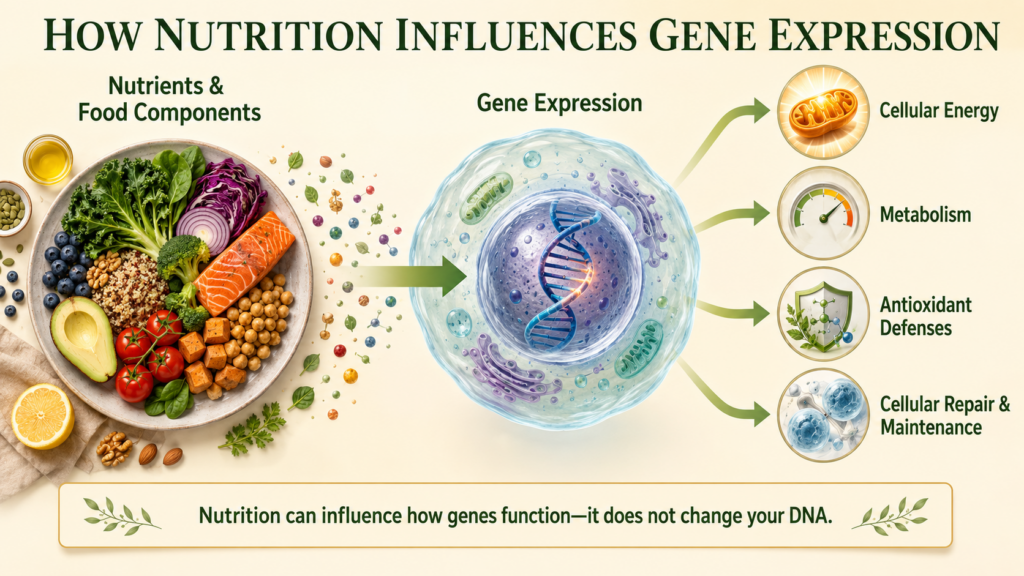
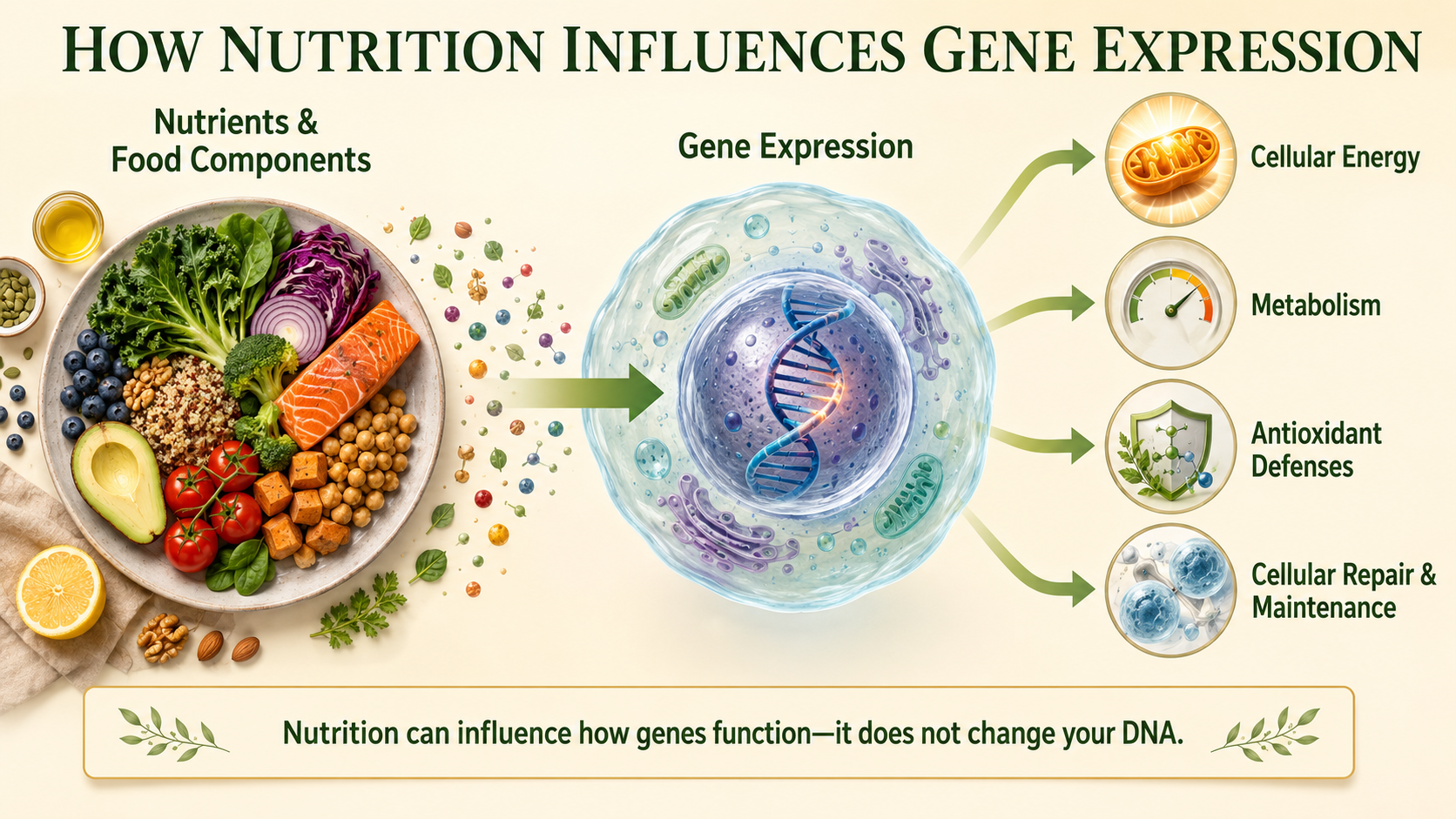
Nutrigenomics does not mean that food changes your DNA sequence. Rather, it examines how nutrition may influence which genes become more or less active—often described as affecting gene expression. Your genes may provide the blueprint, but nutrition can influence how parts of that blueprint are used.
Please Note: This field may eventually support more personalized nutrition, but it is still developing. Genetic information can offer useful clues; it does not predict health outcomes with certainty or replace medical evaluation.
This Cleveland Clinic’s nutrigenomics overview provides examples and a number of additional links regarding how people may respond differently to caffeine, protein, fats, and other dietary factors for those who want to explore this topic further.