

What Are Essential Oils?
Essential oils are highly concentrated aromatic compounds extracted from the flowers, leaves, roots, bark, fruit, or other parts of a plant. The word essential refers to the oil containing the characteristic “essence” or aroma of the plant—not to its being nutritionally essential. Most essential oils are obtained through steam distillation, while citrus oils are commonly extracted by pressing the peel. The plant, growing conditions, extraction method, and manufacturing standards can all affect the quality and composition of the finished oil. Essential oils have a long history of use in personal care, cultural traditions, and spiritual practices. Today, they are most commonly used through aromatic and properly diluted topical applications.
How Do Essential Oils Engage the Body and Mind?
When an essential oil is inhaled, its aroma is detected by receptors in the nose. Those signals travel to areas of the brain associated with memory, emotion, and behavior. This helps explain why a familiar aroma can quickly bring back a memory or influence how we experience a particular moment. When appropriately diluted essential oils are applied to the skin, their aroma and topical qualities can also become part of massage, relaxation, and personal-care routines.
Each essential oil contains a distinctive combination of naturally occurring chemical constituents. Researchers continue to study these compounds, but the evidence supporting specific health benefits varies considerably among oils and uses. Essential oils are best presented as complementary wellness tools—not as substitutes for medical diagnosis or treatment.
Supporting Physical, Emotional, and Spiritual Wellness
At PathFinders, essential oils are incorporated into personalized wellness practices in several ways:
- Physically: Properly diluted oils may be included in massage, foot care, or other personal-care practices to create a soothing and comforting experience.
- Emotionally: Carefully selected aromas can help create an atmosphere that supports relaxation, focus, encouragement, or a more peaceful daily routine.
- Spiritually: Aroma can be incorporated into prayer, reflection, worship, or quiet time, helping create an intentional setting for stillness and spiritual connection.
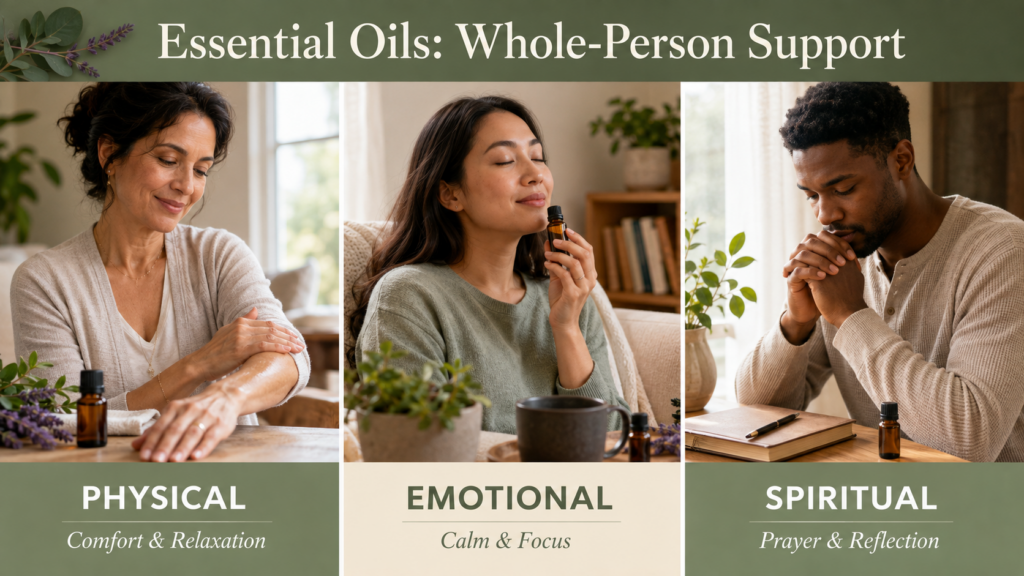
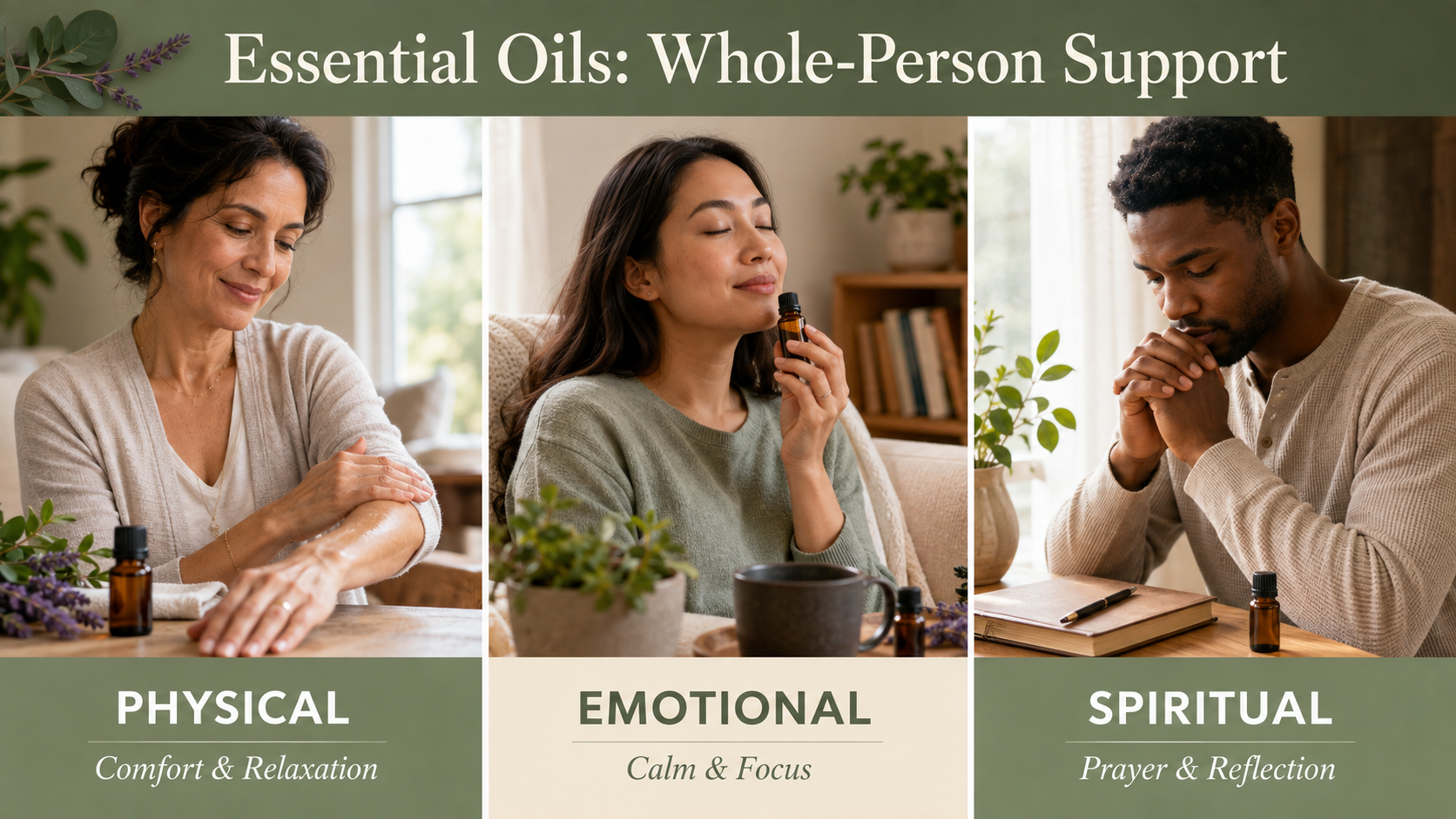
The oils and methods selected should reflect the individual, the intended use, and appropriate safety considerations. The goal is not simply to choose a pleasant fragrance, but to use each oil thoughtfully as part of a broader whole-person wellness plan.
Safe and Thoughtful Use
Because essential oils are highly concentrated, more is not necessarily better. Appropriate dilution, limited amounts, careful product selection, and attention to individual sensitivities are important. Essential oils can cause skin irritation, allergic reactions, medication interactions, or other adverse effects when misused. Some are unsafe to swallow, and special precautions may be needed for children, pregnancy, pets, respiratory conditions, or sensitive skin. Products should always be used according to their labels and with guidance appropriate to the individual. These cautions are consistent with guidance from Poison Control and the FDA’s aromatherapy information.
Essential oils offer another way to put personalized wellness into practice—complementing the physical, emotional, and spiritual dimensions of daily life.
We begin by exploring how aroma can support emotional awareness, calming routines, and more intentional responses in
Essential Oils & Emotional Wellness