

Understanding how repeated thinking influences the way we feel, respond, and live.
Every day, thousands of thoughts pass through our minds. Most are brief and quickly forgotten, but the thoughts we return to again and again can have a powerful influence on how we experience life.
Over time, repeated thoughts shape our emotions, reinforce our beliefs, and influence the choices we make. Our minds are continually learning from what we think, experience, and repeat. Whether those thoughts are encouraging or discouraging, hopeful or fearful, they gradually become familiar ways of interpreting the world around us.
One simple way to understand this process is: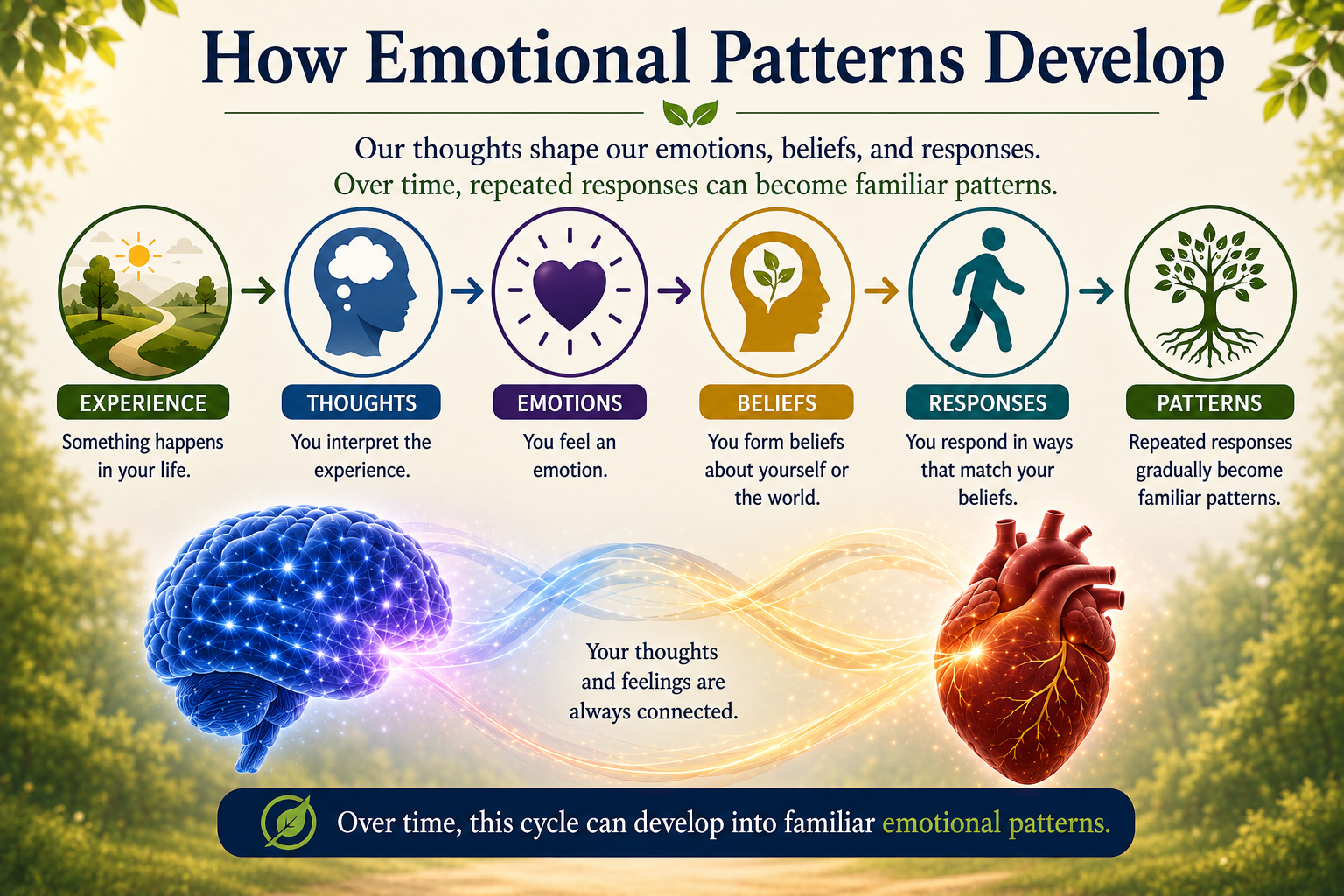 Each step influences the next. As this cycle repeats, our responses become more familiar and increasingly automatic. Over time, what begins as repeated thoughts can develop into well-established emotional patterns that influence how we respond to everyday situations.
Understanding Why We Sometimes React Automatically
Have you ever heard a familiar song and immediately remembered a special moment? Or caught the scent of fresh-baked cookies that instantly reminded you of childhood? Perhaps the sound of someone’s voice, a particular place, or even a photograph brought back emotions before you had time to think about why.
These everyday experiences remind us that our brains naturally connect thoughts, memories, and emotions. Rather than analyzing every situation from the beginning, the brain often relies on familiar patterns to help us respond quickly. Most of the time, this is incredibly helpful. It allows us to learn efficiently, recognize familiar situations, and navigate daily life with less mental effort.
However, the same learning process can also strengthen less helpful emotional responses. If we repeatedly dwell on worry, fear, discouragement, resentment, or negative self-talk, those thought patterns may gradually become our default way of responding to life’s challenges. Sometimes we react emotionally before we fully understand what triggered the response.
Recognizing this doesn’t mean something is “wrong” with us. It simply reflects how the brain is designed to learn through repetition.
Awareness Creates Opportunity
One of the most important steps toward emotional wellness is becoming aware of our own patterns. We cannot change what we fail to recognize. As we begin noticing recurring thoughts, emotional triggers, and familiar reactions, we create an opportunity to respond more intentionally instead of automatically.
One of the principles that guides our approach is that greater awareness often leads to better choices. As we better understand our thought patterns and emotional responses, we are better equipped to explore practical wellness strategies that support both the mind and the body.
Although we cannot always control the circumstances around us, we can become more intentional in how we respond to them. Small, consistent changes in our thinking can gradually influence our attitudes, our relationships, and the decisions we make each day.
Understanding Makes Change Possible
Throughout our journey through Healthy Mind Patterns, one principle has continued to emerge: the patterns influencing our lives are often formed gradually.
Awareness helps us recognize them. Understanding how the brain, mind, and body communicate helps us see where they come from. Recognizing the influence of stress helps us understand what may reinforce them. And neuroplasticity reminds us that patterns can change.
Now we can see one more piece of the picture—our repeated thoughts can influence the emotions, responses, and patterns that gradually become familiar in our lives. Understanding these connections gives us an opportunity to become more intentional about what we allow to shape our thinking. But the journey toward whole-person wellness doesn’t end with understanding how the mind works.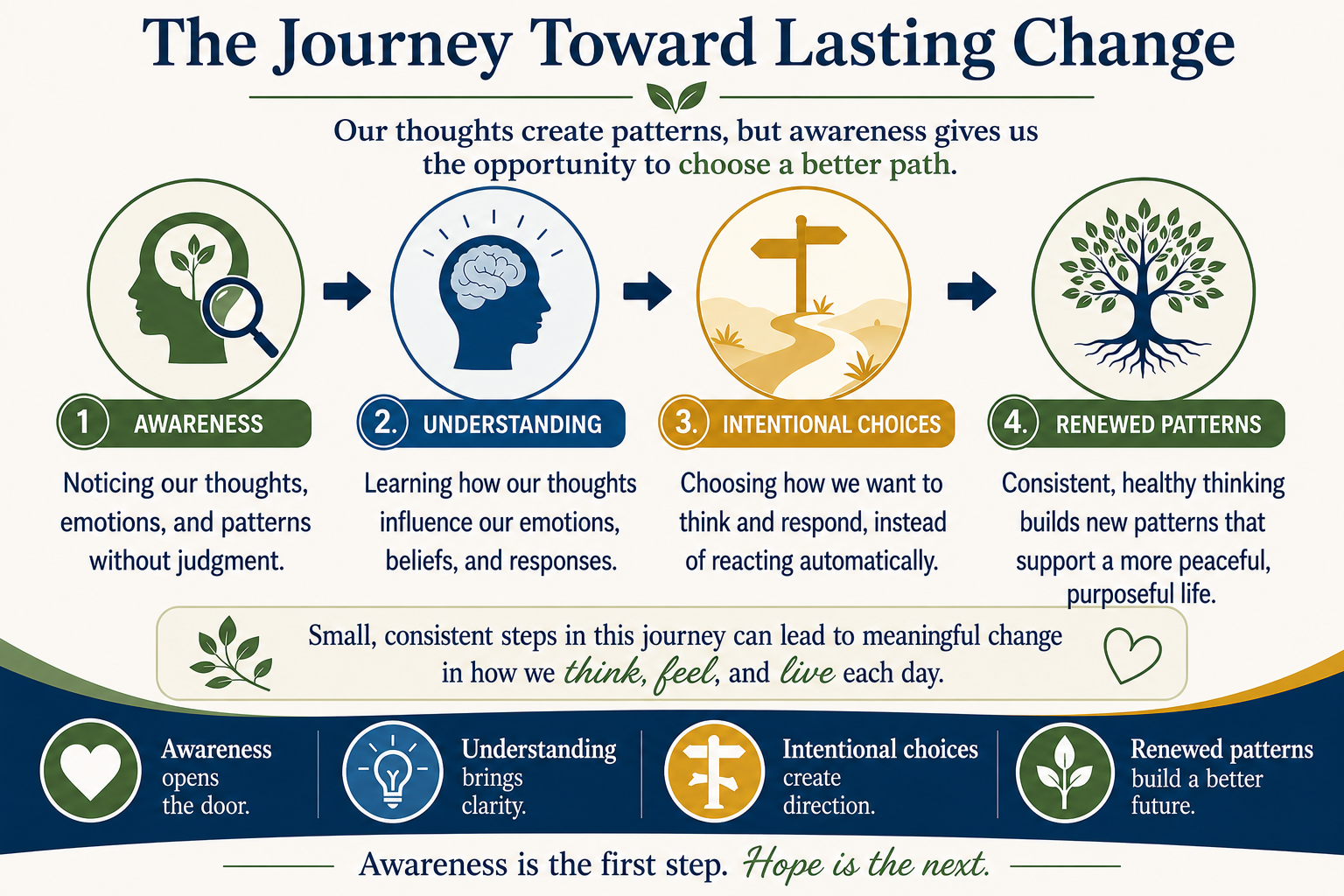
From the Mind to the Heart
Science can help us understand how thoughts and repeated experiences influence the brain. But some of life’s deepest questions reach beyond how we think to what we believe, what gives us hope, what shapes our character, and where we find meaning and purpose. This is where our journey naturally moves from Healthy Mind Patterns into Healthy Spiritual Patterns. There we will explore the spiritual foundations God develops within us—beginning with love and growing through hope, joy, gratitude, peace, and forgiveness—and the spiritual practices that help strengthen our relationship with Him.
Our journey continues by exploring the spiritual foundations that help shape the heart of who we are:
Healthy Spiritual Patterns →
Pingback: Pillar 1: Understand - PathFinders Natural Healthy Solutions