

A Remarkable Partnership
Your mind is constantly processing information, but not all of it happens within your immediate awareness. Psychologists often describe our thinking as involving two closely connected systems that work together every day: the conscious mind and the subconscious mind. Each has a unique role, and together they influence how we think, learn, feel, and respond to the world around us. The human brain is remarkably complex, with specialized regions working together to support awareness, memory, emotion, and behavior. Although researchers have made tremendous advances in neuroscience, many aspects of the mind are still being explored. Scientists continue to investigate how biology, life experiences, relationships, culture, and the environment shape our awareness and influence the way we think, feel, and respond.
The Conscious Mind
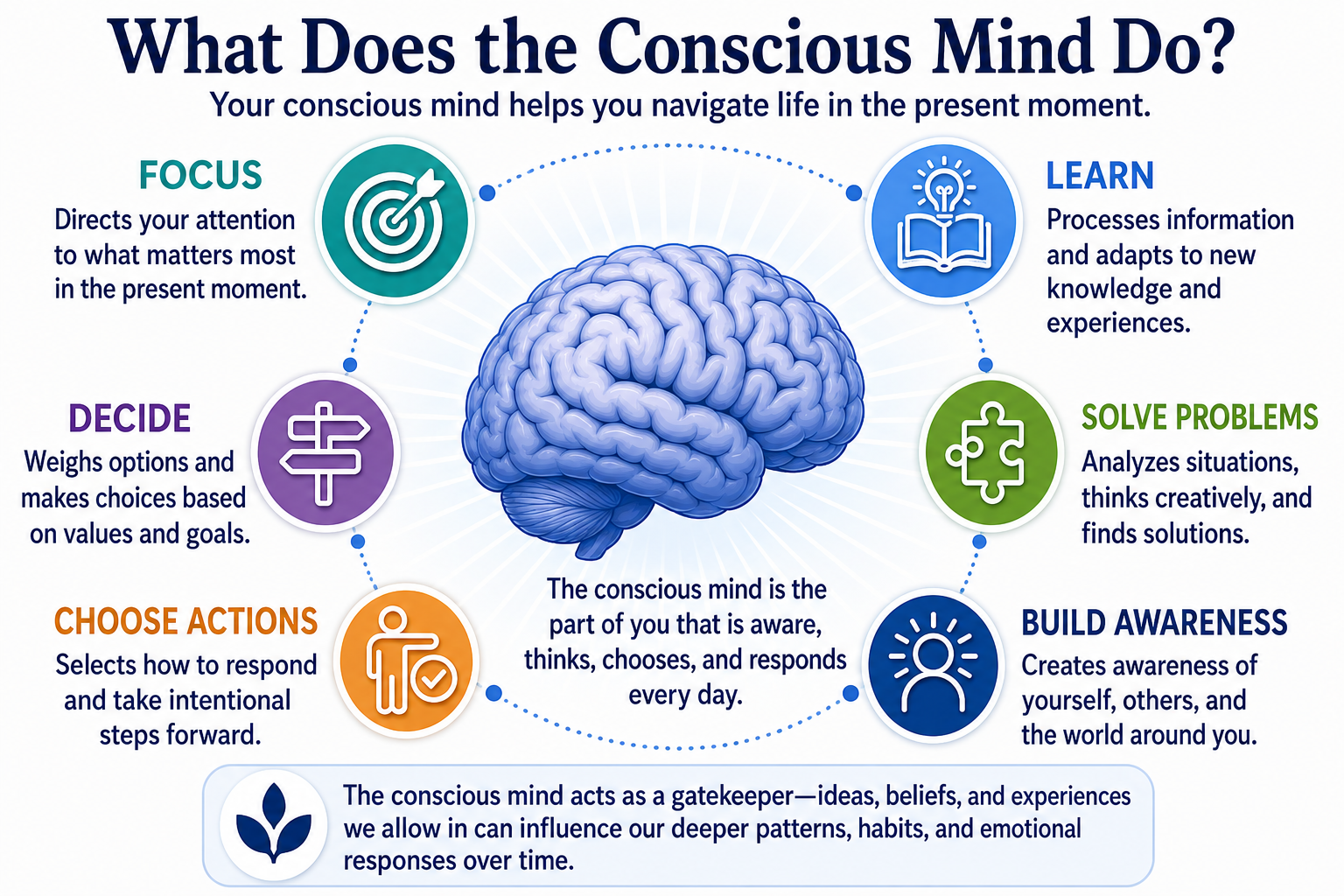
The conscious mind is the part of your thinking that you are aware of right now. It allows you to notice your surroundings, solve problems, make decisions, and intentionally choose how to respond to life’s experiences. Closely related is the preconscious mind, which stores information that isn’t currently in your awareness but can be easily recalled—such as a name, a memory, or a learned skill. Many psychologists describe the conscious mind as a gatekeeper because it helps determine which thoughts, experiences, and ideas receive our attention. Over time, what we repeatedly focus on can gradually influence our deeper habits and emotional patterns.
The Subconscious Mind
The subconscious mind quietly manages much of what happens automatically each day. It stores learned behaviors, emotional associations, memories, and habits, allowing us to perform familiar tasks without consciously thinking about every step. From driving a familiar route to recognizing a friend’s face or reacting emotionally to a situation, the subconscious helps make daily life more efficient by drawing upon experiences we’ve accumulated over time.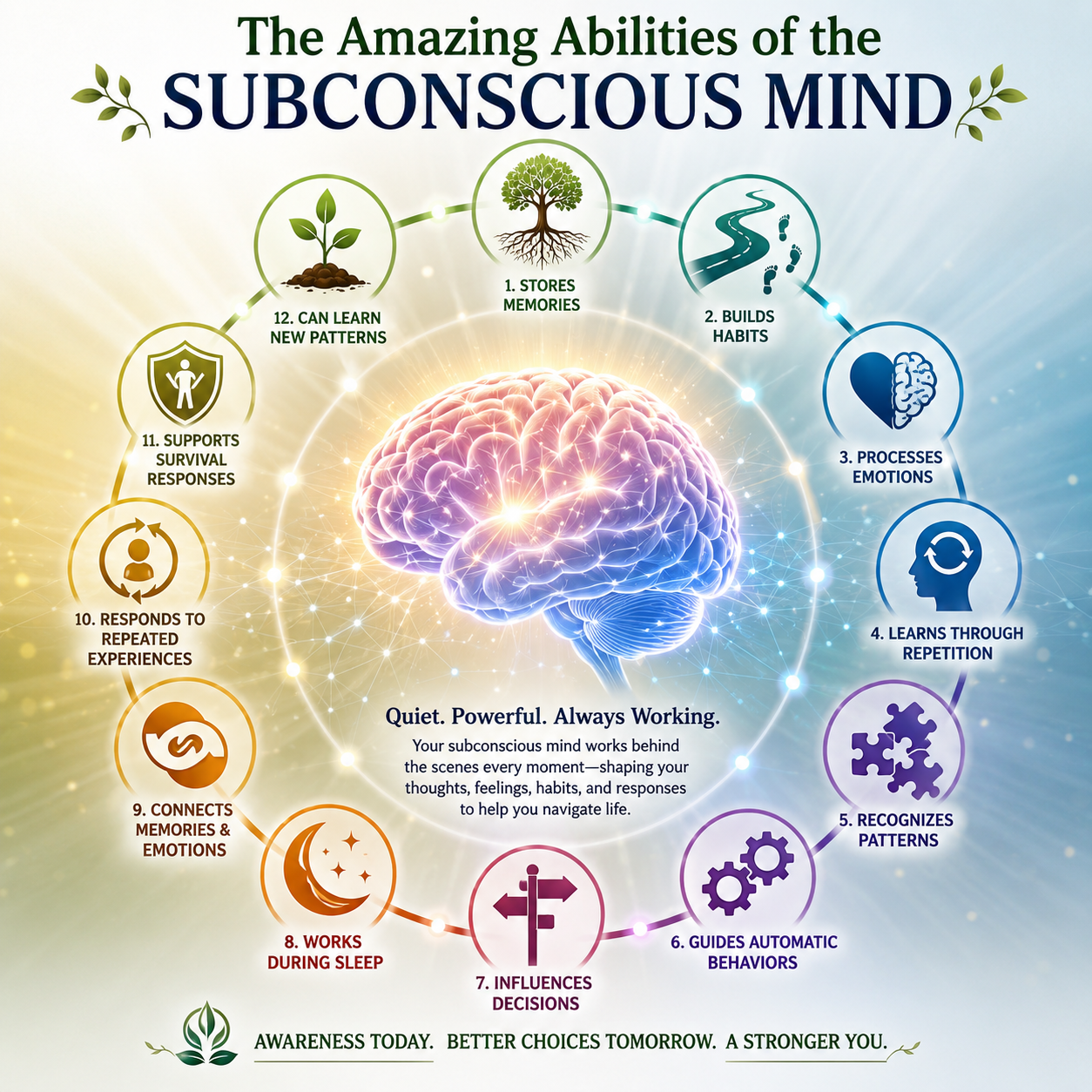
Working Together Every Day
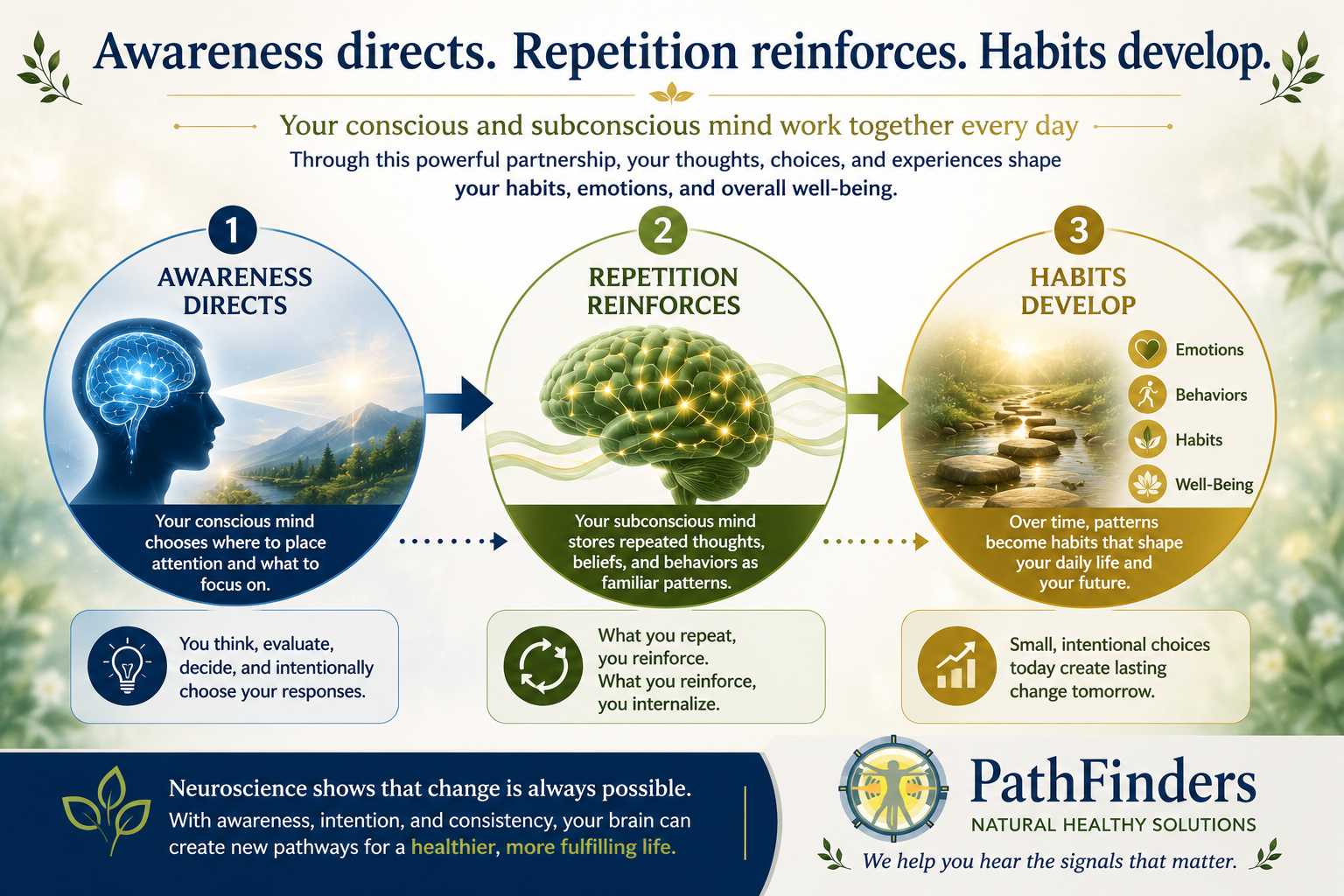
Rather than competing with one another, the conscious and subconscious mind work as partners. During the day, your conscious mind is actively making decisions, solving problems, and directing your attention. The conscious mind helps us learn, evaluate, and make intentional choices. while your subconscious continuously works behind the scenes, managing learned habits, memories, and automatic responses.
The subconscious mind stores those repeated experiences and turns many of them into familiar patterns and automatic responses. During sleep, your conscious awareness rests, but your brain continues important work such as organizing memories, processing emotions, and supporting learning. This partnership allows us to learn new skills, build habits, and adapt throughout life. As we become more aware of our thoughts and behaviors, we gain greater opportunity to strengthen patterns that support emotional resilience and lifelong wellness.
Pingback: Pillar 1: Understand - PathFinders Natural Healthy Solutions