

Your Genes Are Not Your Destiny
Many people believe their health is determined entirely by the genes they inherited. While our genes certainly influence many aspects of our bodies, scientists now understand that genetics is only part of the story. Our DNA serves as the body’s blueprint, providing the instructions for growth, repair, and normal function. Although the DNA sequence itself remains largely unchanged throughout life, the way those genes are used can be influenced by our daily experiences and lifestyle choices. This area of research is known as epigenetics.
What Is Epigenetics?
Think of your DNA as a vast library filled with thousands of instruction books. Epigenetics doesn’t rewrite those books—it simply helps determine which instructions are read, when they’re read, and how actively they’re used. Researchers continue to study how factors such as nutrition, sleep, physical activity, chronic stress, environmental exposures, relationships, and emotional well-being may influence gene expression. These influences help the body continually adapt to the environment around it.
Stress Leaves More Than Emotional Marks
Stress affects much more than our thoughts and feelings. When stress becomes chronic, the body remains in a prolonged state of alert. Over time, researchers have found that this may influence many normal biological processes, including immune function, inflammation, hormone regulation, metabolism, and gene expression. The encouraging news is that our biology is continually responding—not only to stress—but also to healthy choices.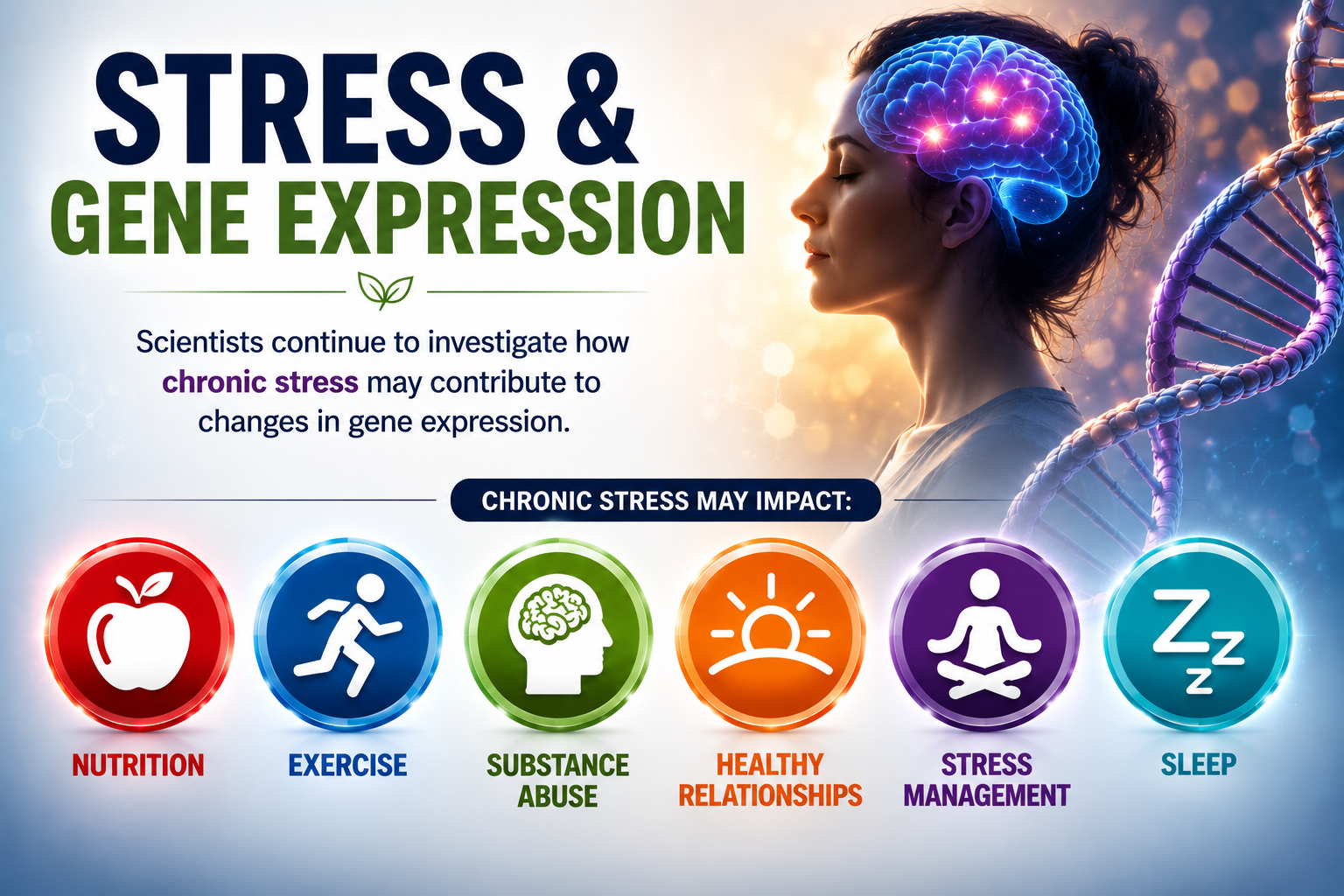
Small Choices Add Up
Healthy habits don’t just improve how we feel today. Consistent choices such as eating nutritious foods, getting adequate sleep, staying physically active, building meaningful relationships, managing stress, and maintaining a hopeful outlook may all contribute to a healthier internal environment that supports normal body function. While no single habit changes everything overnight, small choices practiced consistently can have a meaningful impact over time.
Can These Changes Affect Future Generations?
One of the most fascinating discoveries in epigenetics is that some epigenetic changes appear to be passed from one generation to the next. Although this research is still evolving, scientists are exploring how certain life experiences—including chronic stress—may influence the biology of future generations. These findings should not be viewed as discouraging or deterministic. Instead, they remind us that healthy choices made today may benefit not only ourselves, but potentially those who follow us.
Where Essential Oils May Fit
Essential oils do not alter DNA or permanently change gene expression. However, research suggests that some essential oils may support relaxation, emotional well-being, quality sleep, and the body’s normal response to stress. Many aromatic compounds also demonstrate antioxidant, antimicrobial, and anti-inflammatory properties in laboratory studies. We regard essential oils as one piece of a comprehensive wellness approach that also includes nutritious food, healthy lifestyle habits, stress management, personalized wellness strategies, and caring for the whole person.
Science & Faith
Long before the science of epigenetics emerged, the Bible emphasized the importance of how we live, think, and care for ourselves. While Scripture and science answer different kinds of questions, both recognize that our daily choices matter. As we seek to care for the whole person—body, mind, and spirit—we believe healthy habits, meaningful relationships, gratitude, hope, prayer, and wise stewardship all contribute to a life that honors the remarkable way we were designed.
Our bodies are designed with an incredible blueprint. Every cell contains DNA—the genetic instructions that guide growth, repair, and normal body function. While our DNA sequence remains largely unchanged throughout life, the way our genes are expressed can be influenced by many factors. Scientists are increasingly studying how nutrition, sleep, physical activity, environmental exposures, chronic stress, relationships, and emotional well-being may influence gene expression through a process known as epigenetics. Epigenetics does not change your DNA. Instead, it influences how certain genes are turned “on” or “off,” allowing the body to adapt to its environment.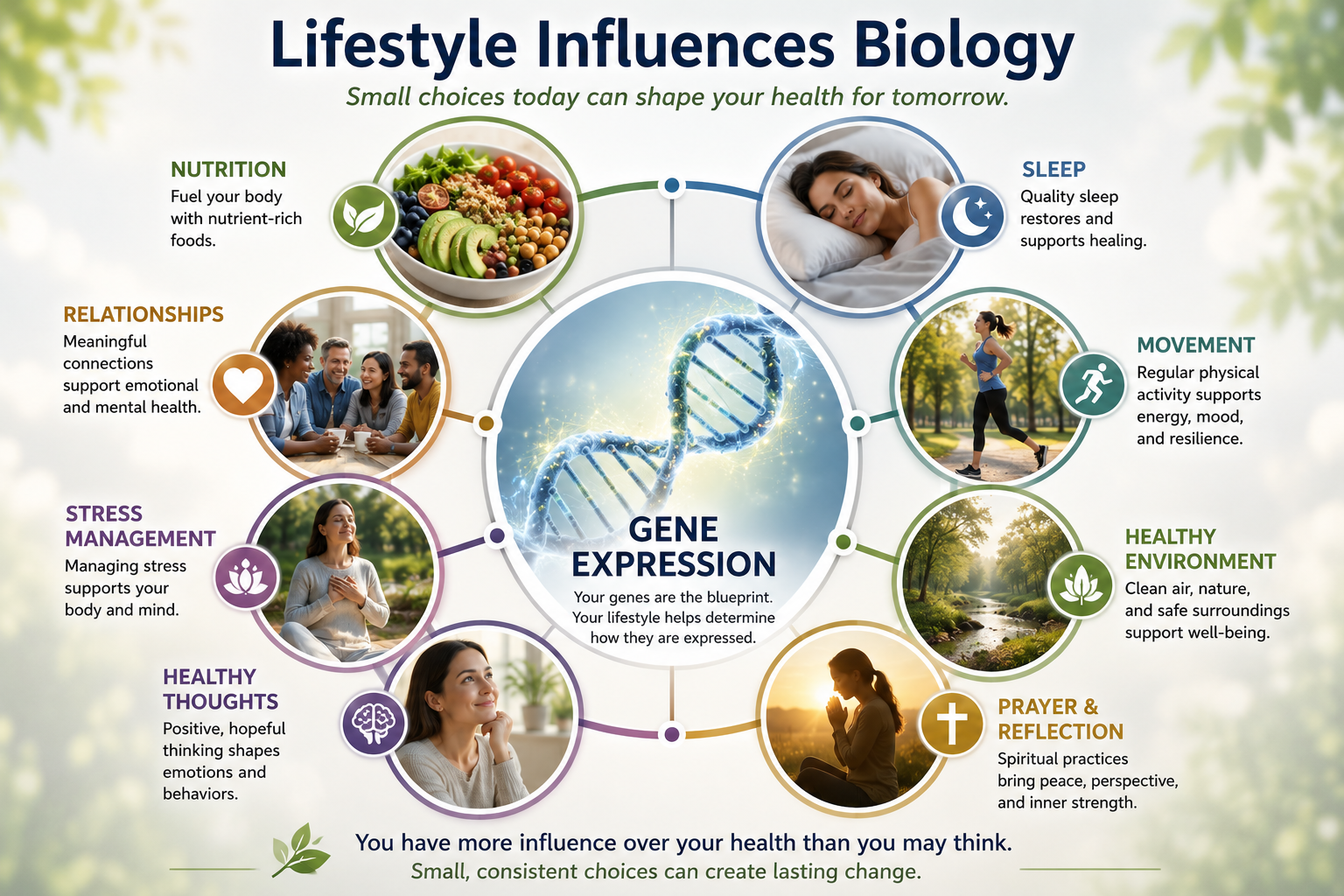
Pingback: Emotional Release Work - PathFinders TBA
Pingback: Pillar 1: Understand - PathFinders Natural Healthy Solutions