Even people with good eating habits may not always receive optimal amounts of every nutrient their bodies need. Research suggests that some fruits, vegetables, and grains contain lower levels of certain vitamins and minerals than similar crops grown decades ago.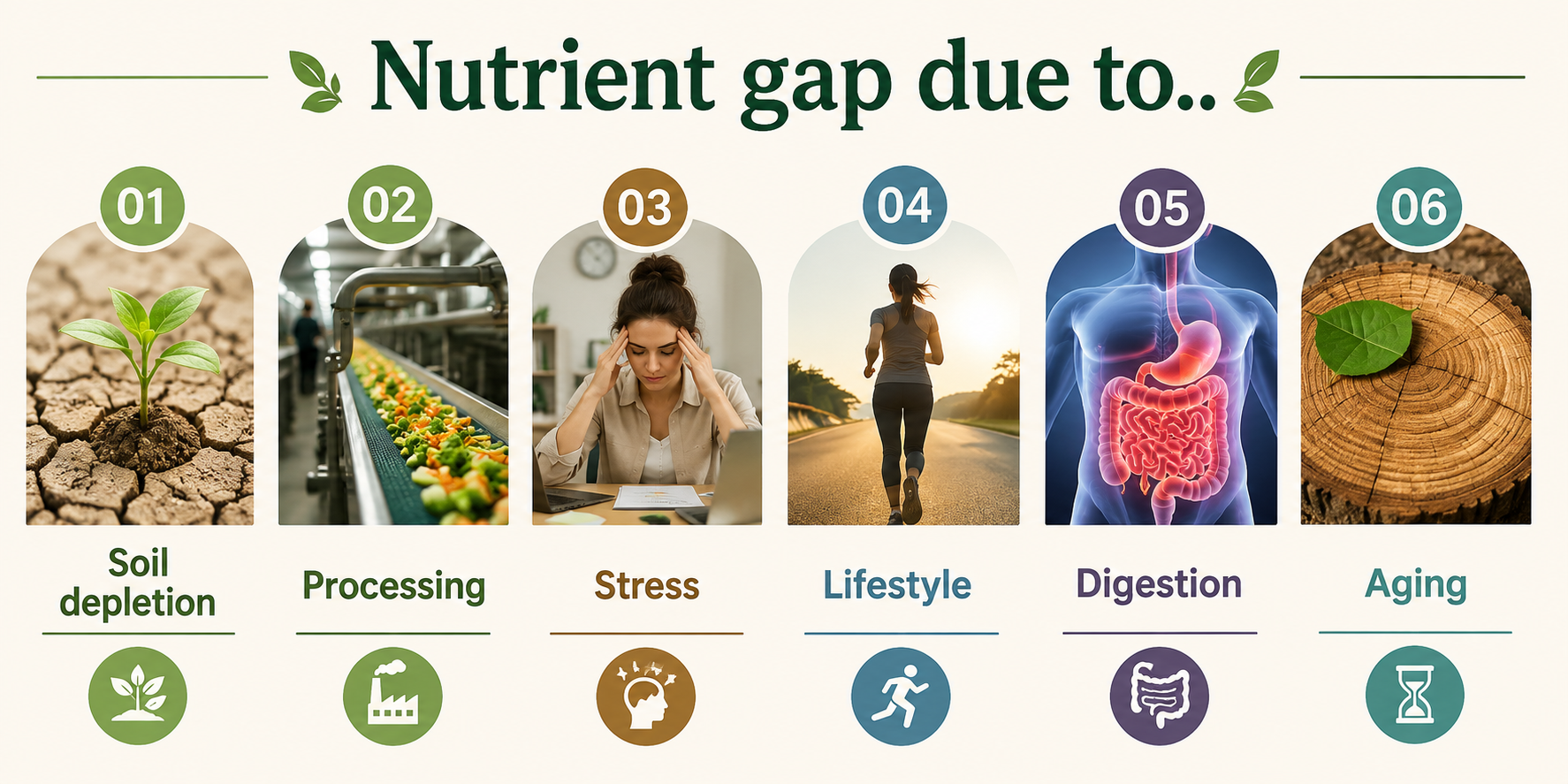
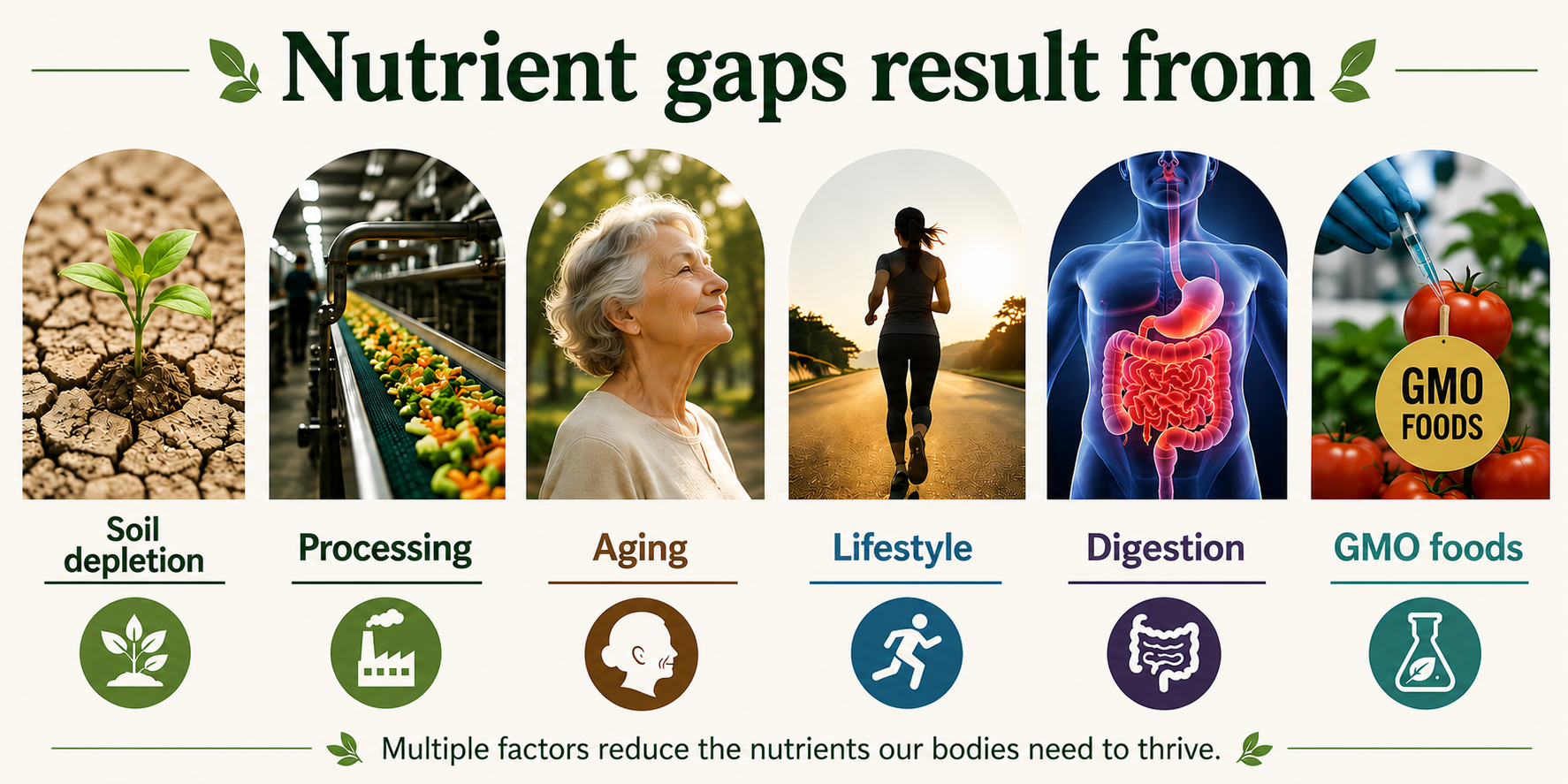
A variety of other factors including modern crop varieties, farming practices, harvesting and storage methods, food processing, issues, and increased physical or emotional stress can all affect nutritional status. Modern lifestyles also increase the nutrient demands on the body. Highly processed foods, certain elements of bioengineered foods, depleted soils, food preferences, digestive environmental changes also play a contributing part.  Are You Absorbing What You Eat?
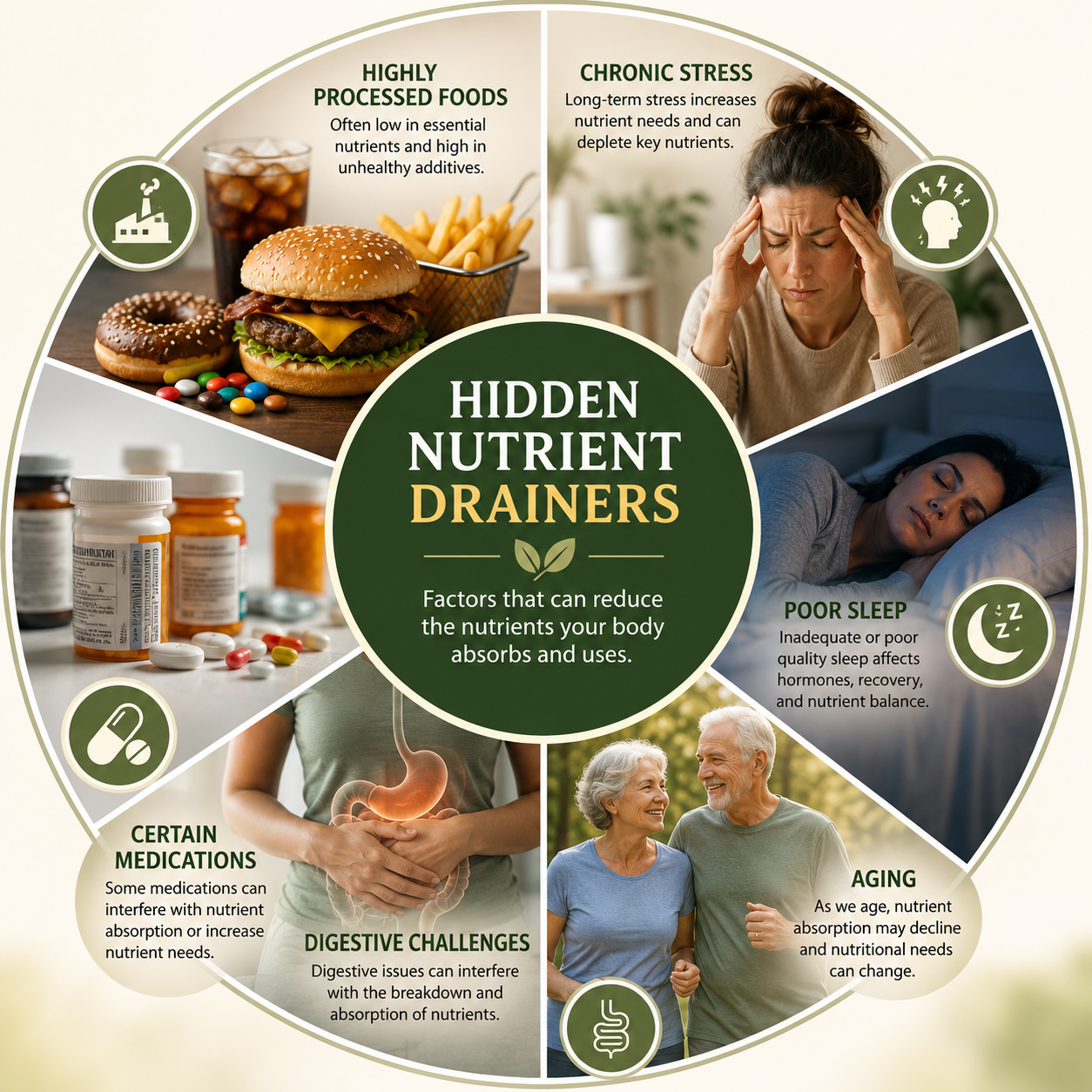
Eating nutritious food is important, but it does not always mean your body is absorbing and using every nutrient. This will also create nutrient gaps. Digestive challenges, chronic stress, poor sleep, aging, certain medications, and heavily processed foods can interfere with digestion, absorption, or increase the body’s nutritional needs. Supporting healthy digestion and addressing these hidden nutrient drainers can help your body receive more benefit from the foods you eat.