

Your body is constantly producing and using energy—even when you’re sleeping. Some of the most important energy-producing processes happen at a level we can’t see, yet they help support every heartbeat, breath, thought, and movement.
Consider These Facts:
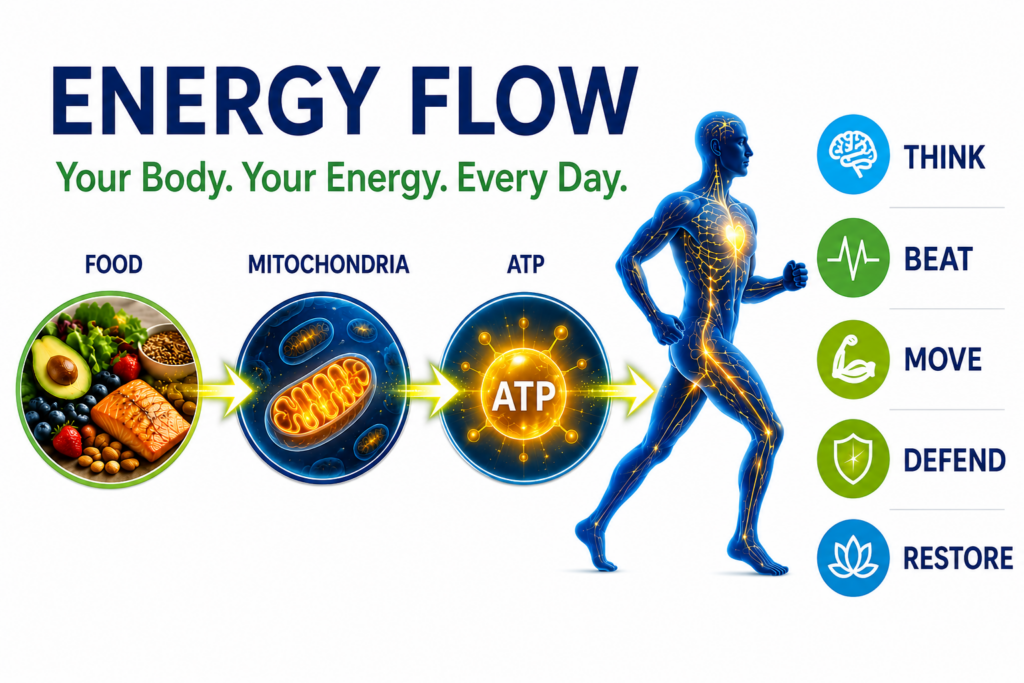
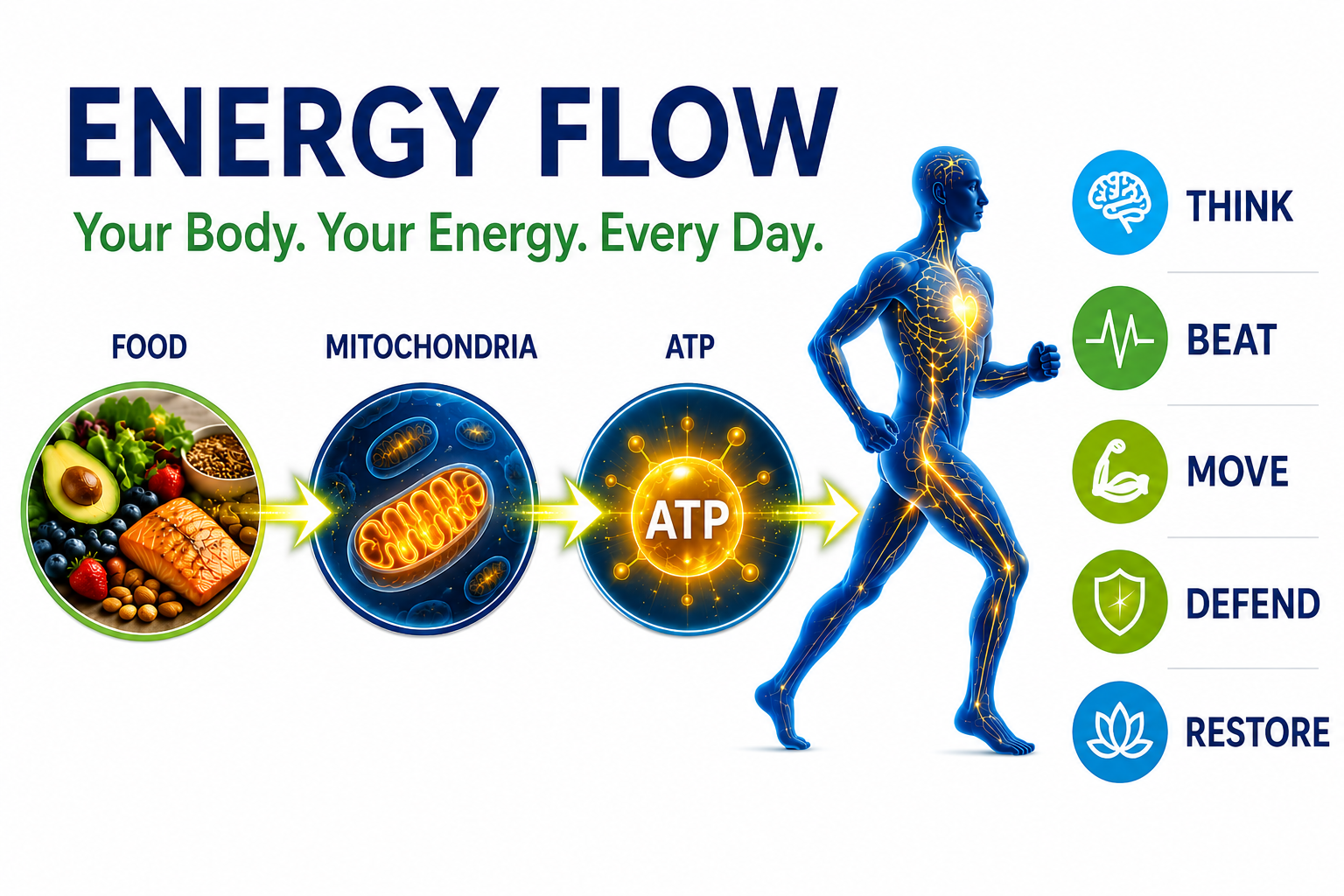
- Every cell in your body (except red blood cells) contains tiny structures called mitochondria.
- Mitochondria are often called the body’s “power plants” because they convert nutrients from food into usable energy.
- This energy is stored in a molecule called ATP (adenosine triphosphate), which powers countless cellular activities.
- Your body continuously transforms energy from one form into another to support normal function.
- Cells communicate through a combination of chemical, electrical, and electromagnetic processes.
- The human body generates measurable electrical activity, including signals from the brain, heart, muscles, and nervous system.
- Modern science continues to explore how energy production and communication influence overall health and well-being.
 Why It Matters
When the body’s energy-producing systems are functioning efficiently, cells have the resources they need to perform their many jobs. Understanding these energy systems may provide valuable insights into how the body adapts to stress, supports recovery, and maintains balance.