

Understanding the unseen pressures that can shape your thoughts, emotions, and overall well-being.
Most people recognize stress when life feels overwhelming. But not all stress is obvious. Sometimes the greatest influences on our well-being are the ones operating quietly beneath the surface.
Your brain and body are constantly communicating through an incredibly complex network involving the nervous system, hormones, neurotransmitters, immune function, and countless biochemical processes. When this communication is working well, you are better able to think clearly, adapt to challenges, and maintain emotional balance. However, ongoing stress can interfere with these natural communication systems.
Stress doesn’t always announce itself as anxiety or worry. It may develop gradually through poor sleep, nutritional deficiencies, physical injuries, chronic inflammation, environmental exposures, emotional burdens, unhealthy habits, or the accumulation of everyday pressures. Over time, these hidden stressors can influence how your body functions and how your mind responds.
How Hidden Stress Can Influence You
Persistent stress may affect: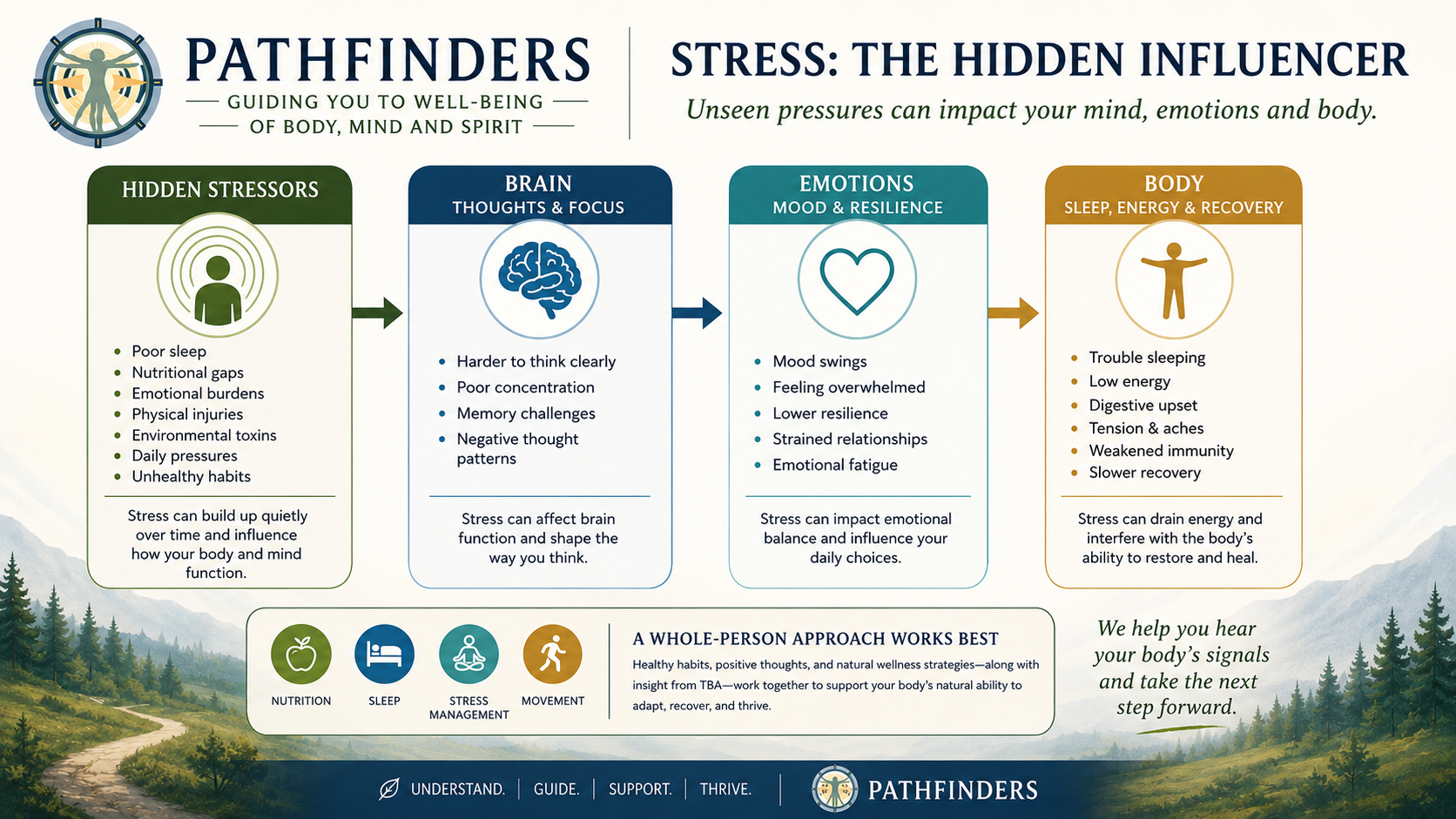 When the body remains under continual stress, it often shifts into a prolonged “survival mode.” Instead of focusing on growth, repair, and restoration, more of its resources are directed toward simply coping with the demands being placed upon it. This doesn’t mean something is necessarily “wrong.” Rather, it may indicate that your body is working harder than it should to maintain balance.
The Brain Learns What We Practice
Stress doesn’t just influence the body—it can also shape the mind. Repeated stressful experiences can reinforce thought patterns and emotional responses. The encouraging news is that these patterns are not necessarily permanent. Research into neuroplasticity has shown that the brain can continue to form new connections throughout life.
As we intentionally practice healthier thinking, gratitude, prayer, forgiveness, mindfulness, positive relationships, and other life-giving habits, we strengthen new neural pathways that can support greater resilience and emotional well-being. It’s the consistent small choices, that often produce meaningful change over time.
Where Total Body Analysis (TBA) Fits In
At PathFinders, we believe that understanding hidden stress can be an important first step toward improving wellness.
Our Total Body Analysis (TBA) is a gentle, non-invasive assessment designed to help identify patterns of stress that may be influencing how the body is functioning. Rather than focusing only on symptoms, TBA looks for areas where the body’s communication systems may be experiencing increased stress. Think of it like checking the electrical panel in a home. When a breaker trips, the problem isn’t always where the lights went out. Likewise, the source of stress affecting the body may not always be where you notice the symptoms.
TBA helps support Mind Wellness in the following ways: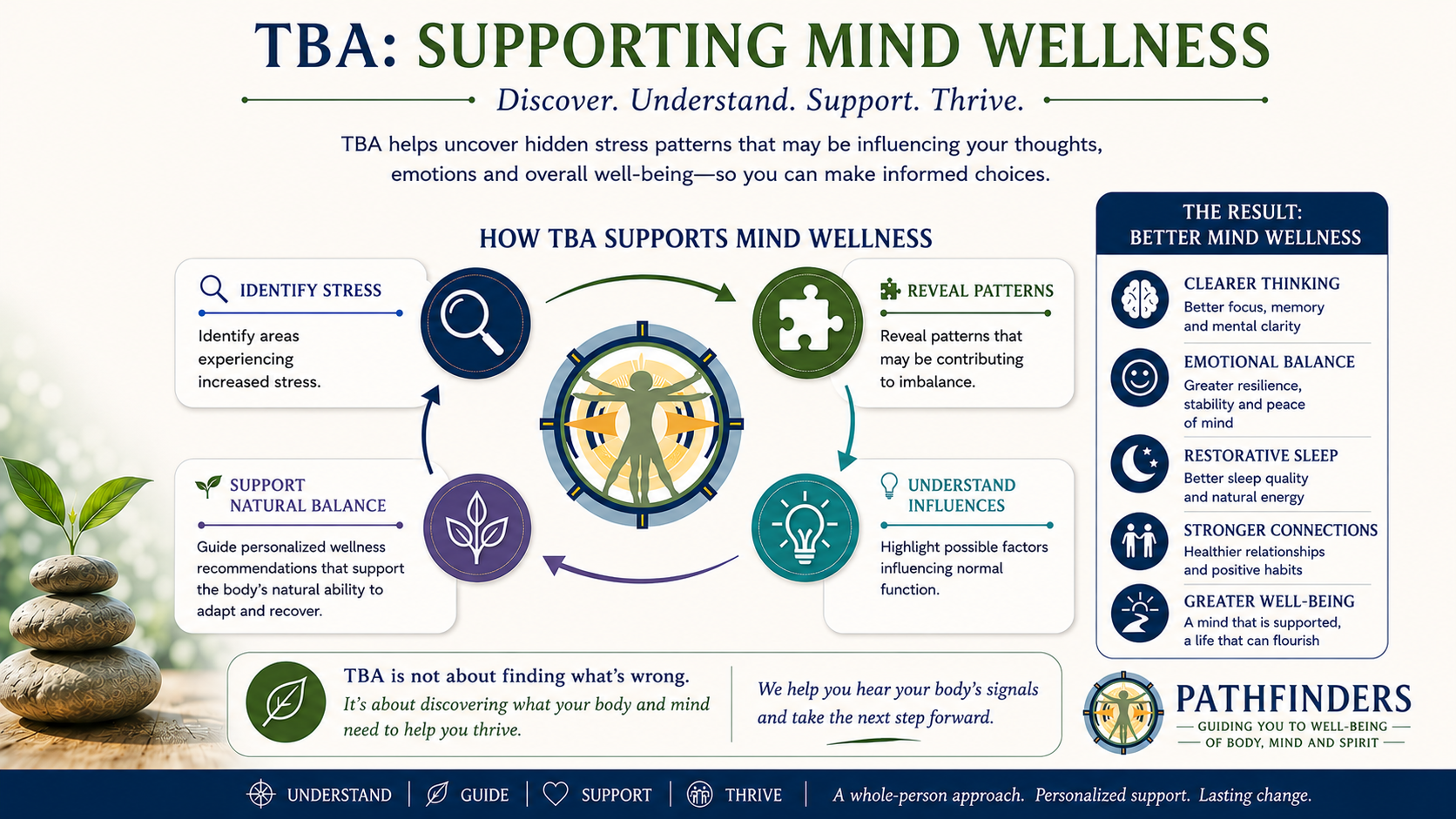
Combined with healthy nutrition, quality sleep, physical activity, stress management, healthy thought patterns, and natural wellness strategies, TBA becomes one piece of a comprehensive approach to supporting both physical and emotional wellness.
Moving Forward
Stress is a normal part of life, but living under constant hidden stress doesn’t have to become your normal. Understanding how stress influences the brain and body allows you to make informed choices that support resilience, restore balance, and promote long-term wellness. At PathFinders, our goal isn’t simply to manage symptoms—we want to help you better understand your body’s signals, identify hidden stress patterns, and build practical habits that support wellness of the body, mind, and spirit.
Because when you understand what may be influencing your health, you’re better equipped to take the next step forward.