

Hope After Stress
If long-term stress can influence the brain, does that mean those changes are permanent? Fortunately, the answer is no. One of the most encouraging discoveries in modern neuroscience is that the brain has an extraordinary ability to adapt throughout life. Scientists call this neuroplasticity—the brain’s ability to reorganize itself by forming and strengthening neural connections in response to learning, experience, and repeated activity.
For many years, scientists believed the adult brain became largely “fixed” after childhood. Today, research tells a very different story. Your brain is continually adapting to the way you think, learn, practice, and respond to life’s experiences. This remarkable ability provides genuine reason for hope. Although stress can influence the brain, the
How Neuroplasticity Works
Every experience, every new skill, and every repeated thought helps strengthen certain pathways within the brain. Imagine walking through a grassy field. The first time you cross it, the grass barely bends beneath your feet. Walk the same path day after day, however, and a well-defined trail gradually appears. Your brain works in much the same way. The more often groups of brain cells communicate with one another, the stronger those connections become. Over time, these well-used pathways allow certain thoughts, emotions, and behaviors to occur with less conscious effort. This ability makes learning possible throughout every stage of life.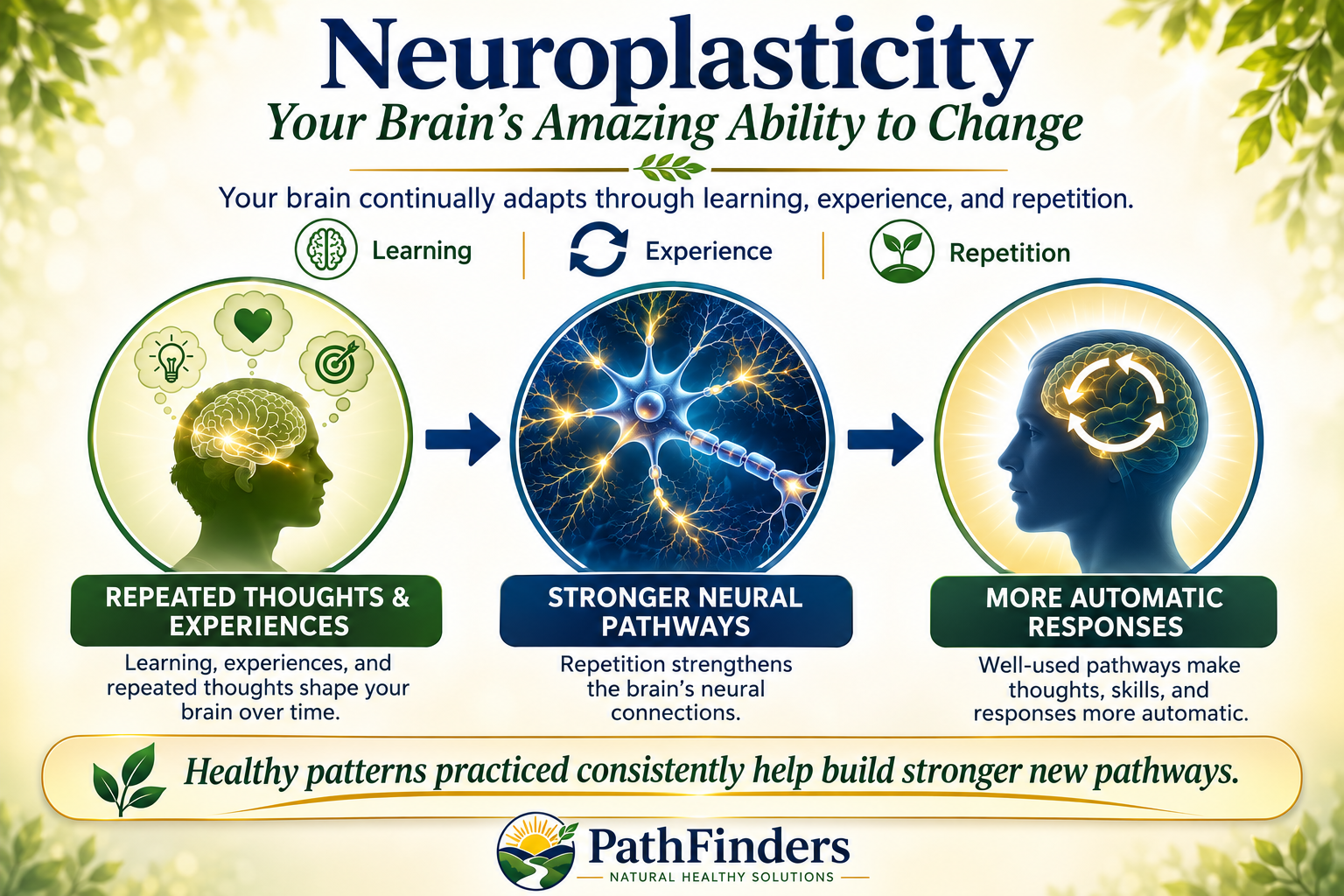
Repetition Shapes the Brain
The brain is constantly learning from repetition. Whenever we repeatedly practice a skill, solve problems, play music, learn a language, or drive a car, the brain strengthens the neural pathways involved. These stronger pathways allow us to perform familiar tasks more efficiently and with greater confidence. This remarkable process benefits nearly every area of life.
However, repetition itself is neutral. Just as healthy behaviors become easier through practice, repeated worry, fear, negative self-talk, chronic stress, or other unhelpful thinking patterns can also strengthen the neural pathways associated with those responses. Over time, these reactions may begin to feel increasingly automatic.
The encouraging news is that the same process that helped create those patterns can also help reshape them.
The Good News
One of the most hopeful aspects of neuroplasticity is that the brain remains capable of change throughout life.
As healthier ways of thinking, responding, and living are practiced consistently, new neural pathways become stronger while older, less-used pathways gradually weaken. Meaningful change rarely happens overnight. Like building physical strength or learning a new skill, developing healthier brain patterns takes patience, repetition, and persistence. Each positive choice becomes another opportunity for the brain to reinforce healthier pathways.
Neuroplasticity reminds us that growth is always possible.
Creating an Environment for Healthy Change
While neuroplasticity is a natural ability of the brain, our daily choices help shape the environment in which that change occurs. Healthy brain function is supported by practices such as: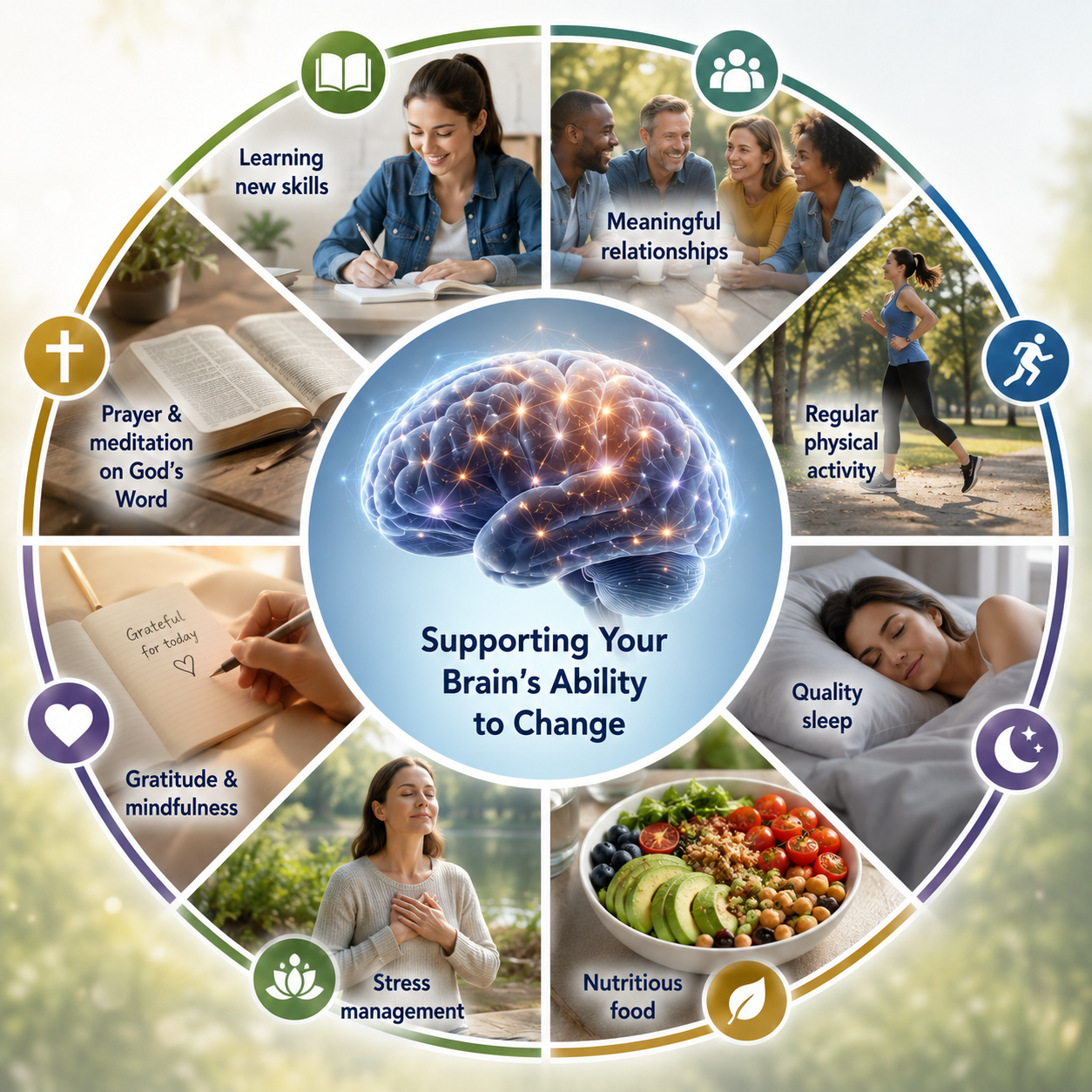
Together, these daily practices help support lifelong learning, emotional resilience, and overall well-being. Just as the brain can adapt and create new neural pathways, researchers have also discovered that many lifestyle choices can influence how genes are expressed. While your DNA provides the blueprint, factors such as nutrition, sleep, movement, stress, and relationships may influence how that blueprint is used. Together, these discoveries remind us that our bodies are continually adapting to the choices we make.
Supporting Lasting Change
We are passionate about lasting change that involves caring for the whole person—body, mind, and spirit. As individuals become more aware of their thought patterns, emotional responses, lifestyle habits, and sources of stress, they are better equipped to make intentional choices that support healthier patterns over time. Combined with sound nutrition, healthy lifestyle practices, stress management, and timeless biblical principles, the brain’s remarkable ability to adapt provides genuine encouragement that positive change is possible.
Renewing the Mind
Long before neuroscience described neuroplasticity, Scripture emphasized the importance of renewing the mind. While science explains many of the biological processes involved, the Bible speaks to the transformation that begins within the heart and mind. Although these perspectives approach the subject from different directions, both recognize that our patterns of thinking influence the way we live.
As the Apostle Paul wrote:
“Do not conform to the pattern of this world, but be transformed by the renewing of your mind.”
— Romans 12:2
Renewing the mind is a lifelong journey. As we intentionally pursue truth, wisdom, and healthy patterns of living, we can continue to grow in resilience, hope, and well-being throughout every season of life.
Pingback: Pillar 1: Understand - PathFinders Natural Healthy Solutions