

Your Brain’s Amazing Ability to Change
For many years, scientists believed the brain became largely “fixed” once adulthood was reached. Today, research tells a very different story. The brain has an incredible ability to reorganize, adapt, and form new connections throughout life—a process known as neuroplasticity.
Every experience, every new skill, and every repeated thought strengthens certain pathways within the brain. Much like walking through a grassy field, the more often you follow the same path, the more defined it becomes. Your brain works in a similar way. Repeated patterns of thinking gradually create well-traveled neural pathways that make those thoughts and responses feel more automatic.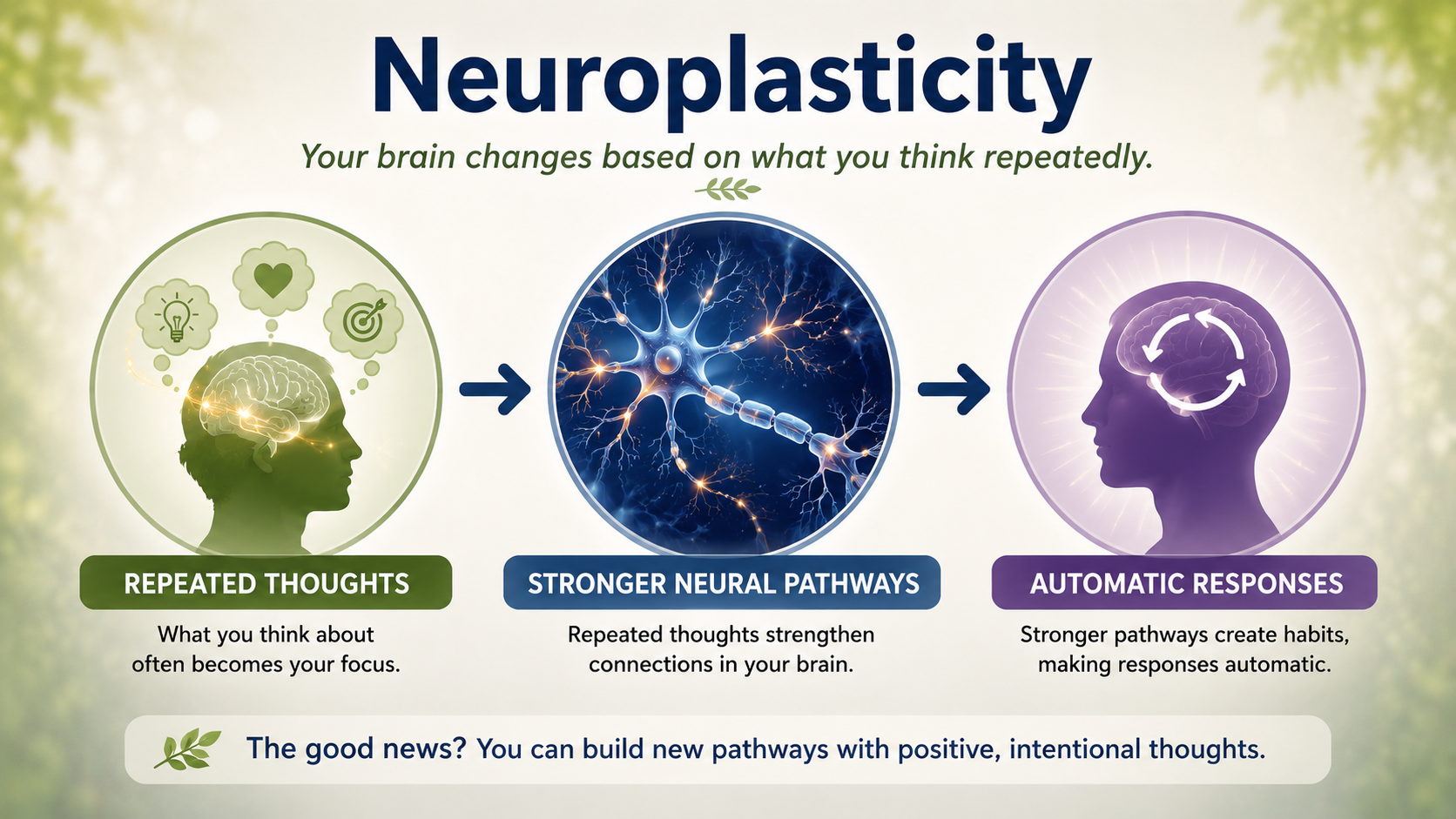
Repetition Shapes the Brain
The brain is constantly learning from repetition. Thoughts we revisit frequently—whether helpful or harmful—strengthen the neural connections associated with them. This is one reason habits become easier over time. Repeated behaviors require less conscious effort because the brain has built efficient pathways that allow those responses to occur almost automatically.
This remarkable ability helps us master valuable skills like reading, driving, playing an instrument, or riding a bicycle. Yet the same process can also reinforce unhealthy patterns such as chronic worry, negative self-talk, fear, or unhealthy emotional reactions.
The Good News
Because the brain can change, unhealthy patterns do not have to remain permanent.
As we intentionally practice healthier ways of thinking, responding, and behaving, the brain begins strengthening new neural pathways while older, less-used pathways gradually become weaker. Although meaningful change usually takes time and consistent practice, research continues to demonstrate that the brain remains capable of learning and adapting throughout life. This gives us genuine reason for hope.
More Than Positive Thinking
Neuroplasticity is not simply “thinking positive.” Rather, it reflects the brain’s natural ability to adapt in response to repeated experiences. Healthy lifestyle choices can support this process, including:
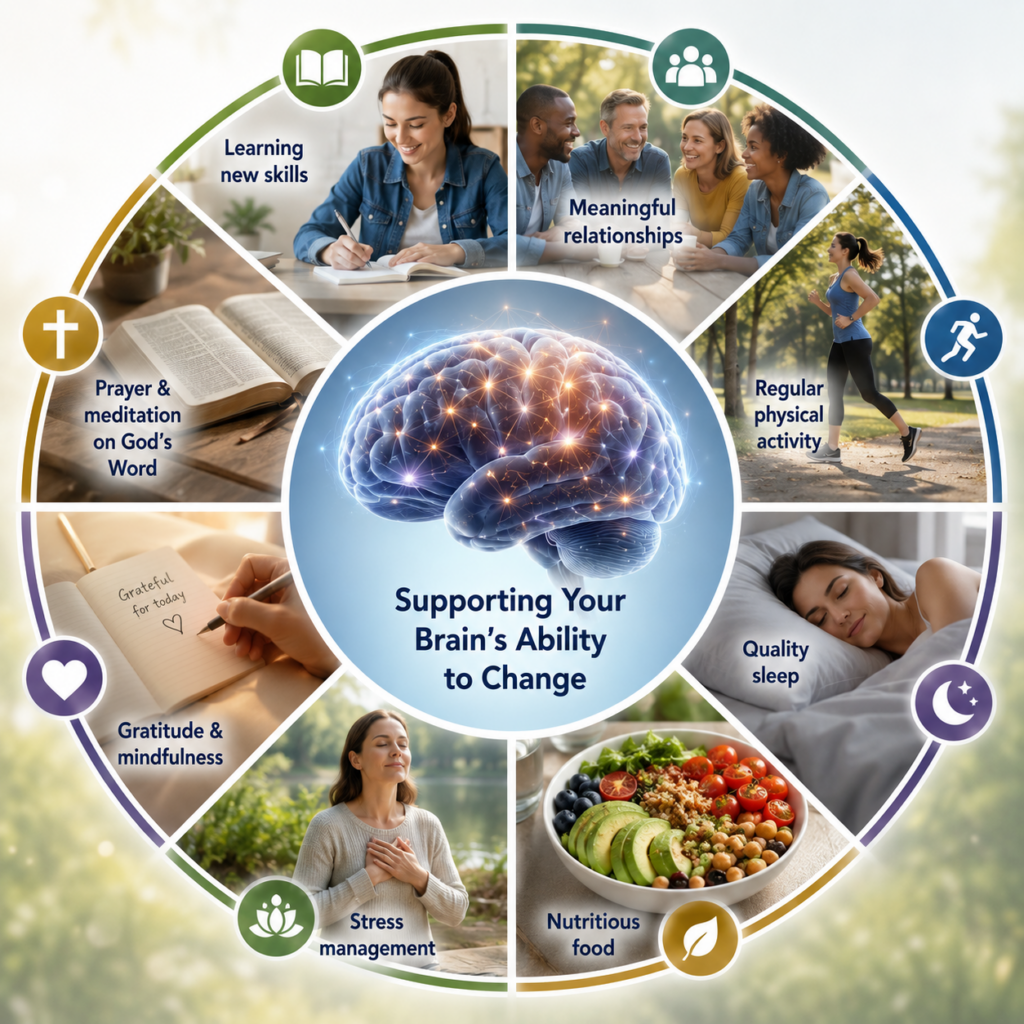 Together, these practices create an environment that supports
lifelong learning, resilience, and emotional well-being.
Supporting the Brain’s Ability to Change
At PathFinders, we believe lasting wellness involves caring for the whole person—body, mind, and spirit. As individuals become more aware of their thought patterns, emotional responses, and sources of stress, they are better equipped to make choices that support healthier habits over time.
When combined with sound nutrition, healthy lifestyle practices, stress management, and faith-based principles, the brain’s remarkable ability to adapt provides encouragement that positive change is possible.
Long before neuroscience described neuroplasticity, the Bible spoke about the importance of renewing the mind. While Scripture and science approach the subject from different perspectives, both recognize that our patterns of thinking influence the way we live.