

How Emotional Patterns Are Created
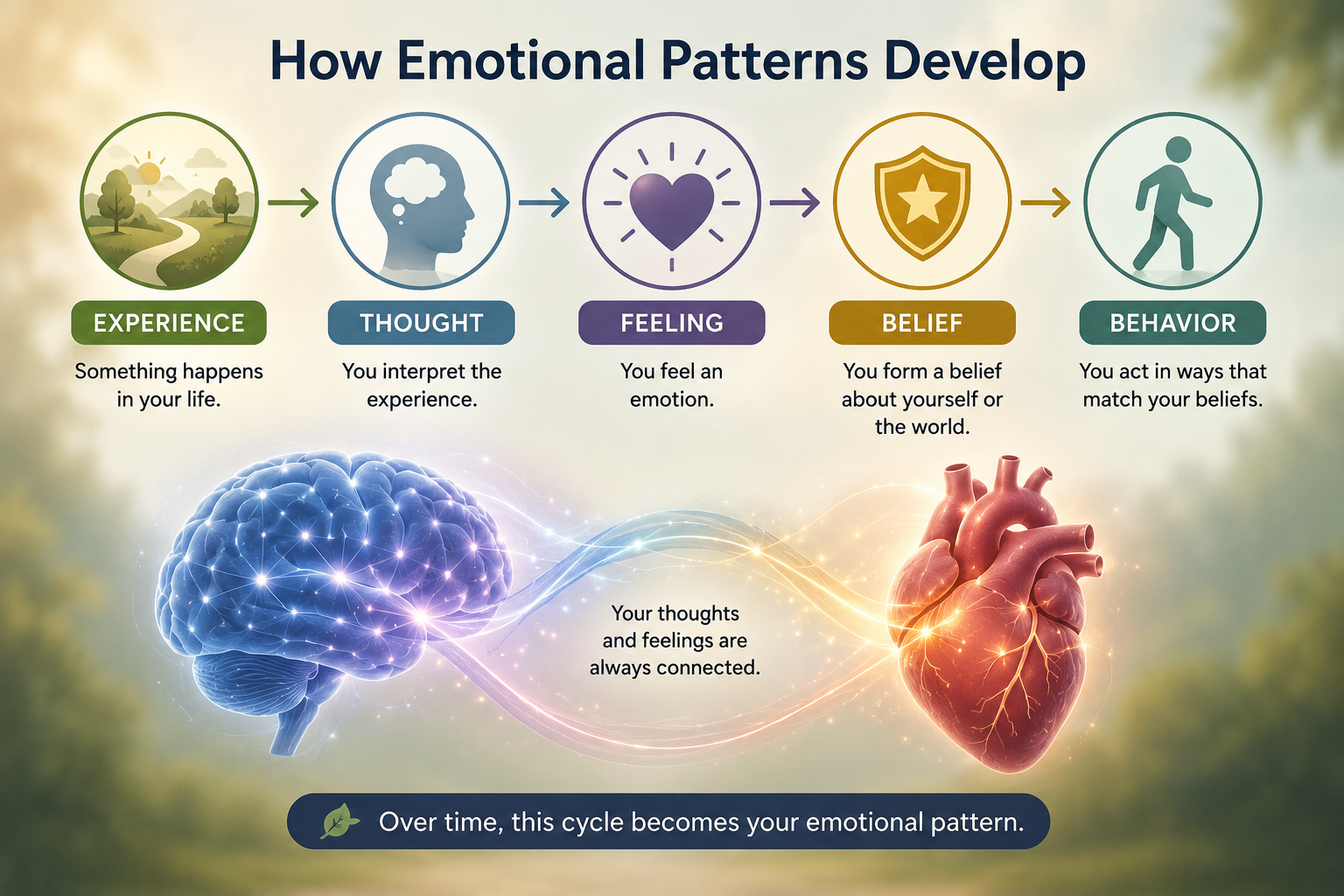
Our thoughts, feelings, and reactions are shaped over time by our experiences and the meanings we attach to them. Every day, our conscious mind interprets events, conversations, and experiences. Over time, these interpretations can become deeply rooted patterns that influence how we think, feel, and respond to life.
How Emotional Patterns Develop
 Emotional patterns are often formed when we:
- Repeat the same thoughts over and over
- Attach meaning to words or experiences
- Accept messages from others as true
- Reinforce beliefs about ourselves and the world
These beliefs may be helpful and empowering, or they may be limiting and inaccurate. Regardless of whether they are true, repeated thoughts and feelings can become familiar patterns.
The Power of Self-Talk
Many of our daily thoughts happen automatically. The conversations we have with ourselves can strengthen existing beliefs and influence how we respond to situations. Over time, these internal messages can shape our outlook, confidence, and emotional well-being.
Why Emotions Feel So Real

Have you ever cried during a movie or felt inspired by a story?
The mind can respond emotionally to both real and imagined experiences.
This is why memories, thoughts, and expectations can have such a powerful impact on how we feel.
The Need for Consistency
People naturally seek experiences that match what they already believe. When our thoughts and feelings align, we often experience a sense of certainty and internal harmony. However, when our thoughts say one thing and our emotions say another, we may feel this instead: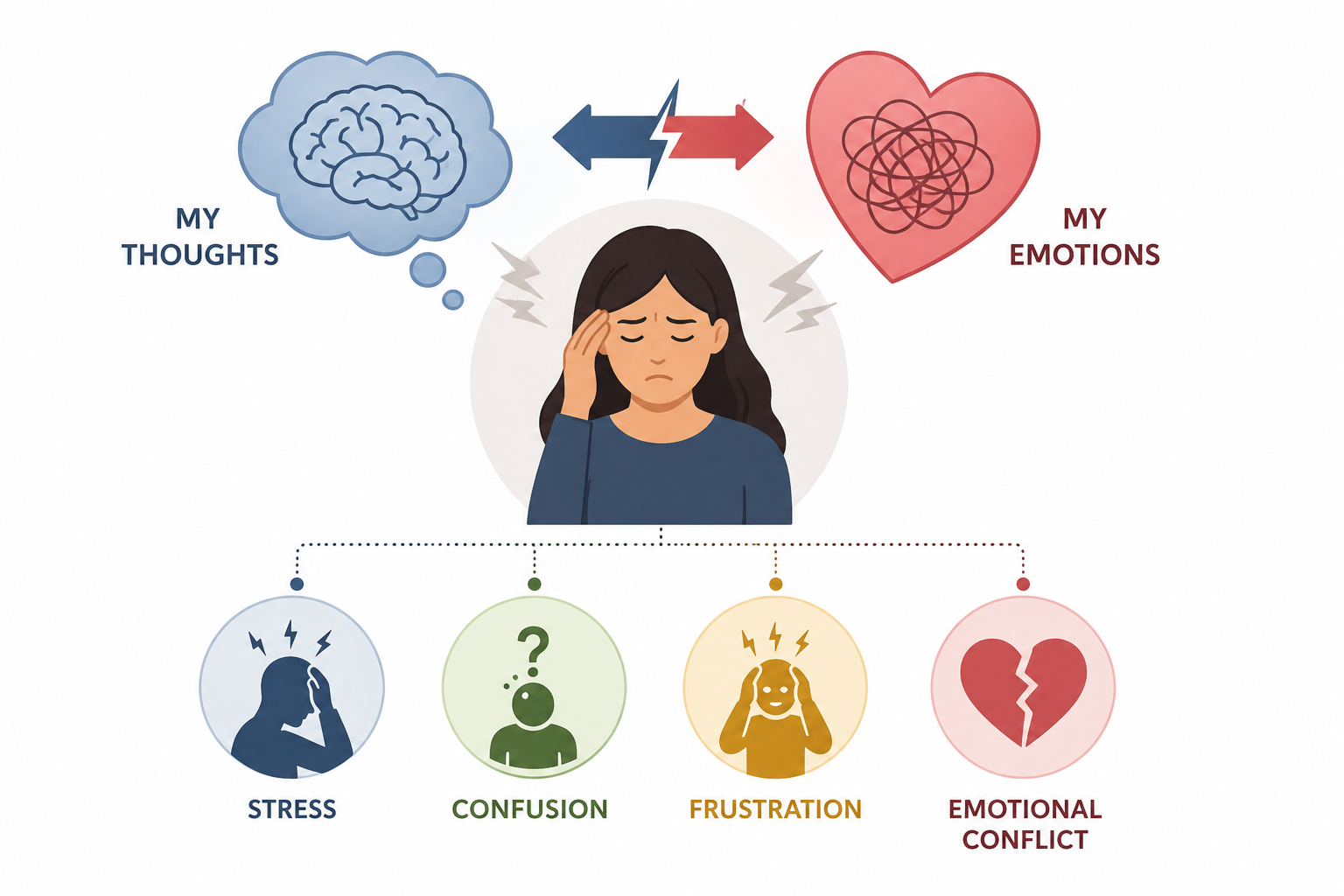
These feelings can be uncomfortable, but they may also signal that change is needed.
Creating Positive Change
Lasting change begins with awareness. As we recognize old patterns and challenge limiting beliefs, new perspectives can emerge. When perceptions change, thoughts can change. As thoughts change, feelings and behaviors often follow. Change may happen quickly or gradually, but the process begins by becoming aware of the stories we tell ourselves and choosing healthier ways to view our experiences.
The goal is not perfection.
The goal is greater clarity, balance, and alignment between what we think, what we feel, and how we live.
Pingback: Emotional Release Work - PathFinders TBA