

Discover the Signals That Matter
Your body communicates in many ways. Changes in energy, digestion, sleep, comfort, resilience, or overall function may signal that something deserves attention. Recognizing these concerns is often what brings someone to PathFinders—but knowing where to begin is not always as obvious. Total Body Analysis helps organize the conversation by exploring patterns of stress and identifying areas where supportive attention may be most useful.
 Looking Beyond the Immediate Concern

The concern you notice may be an important clue, but it does not always reveal the complete picture. Two people experiencing similar concerns may have very different nutritional patterns, lifestyle demands, environmental influences, physical stressors, emotional pressures, or personal histories. For that reason, TBA does not begin with a predetermined program. It considers the individual as a whole and uses the information gathered during the session to help determine which areas should be explored more closely. The purpose is not simply to ask, “What concern brought you here?” It is to ask:
- What patterns may be placing additional stress on the body?
- Which areas appear to need the most immediate support?
- Are several concerns pointing toward a shared area of priority?
- What practical changes may provide an appropriate place to begin?
Finding the Patterns Beneath the Concerns
Think of the body as an interconnected communication network. When several demands are placed on that network, the most noticeable concern may not be the only area needing attention. TBA uses a structured process together with your health history, lifestyle, current concerns, and personal goals to explore the broader picture. It is helpful in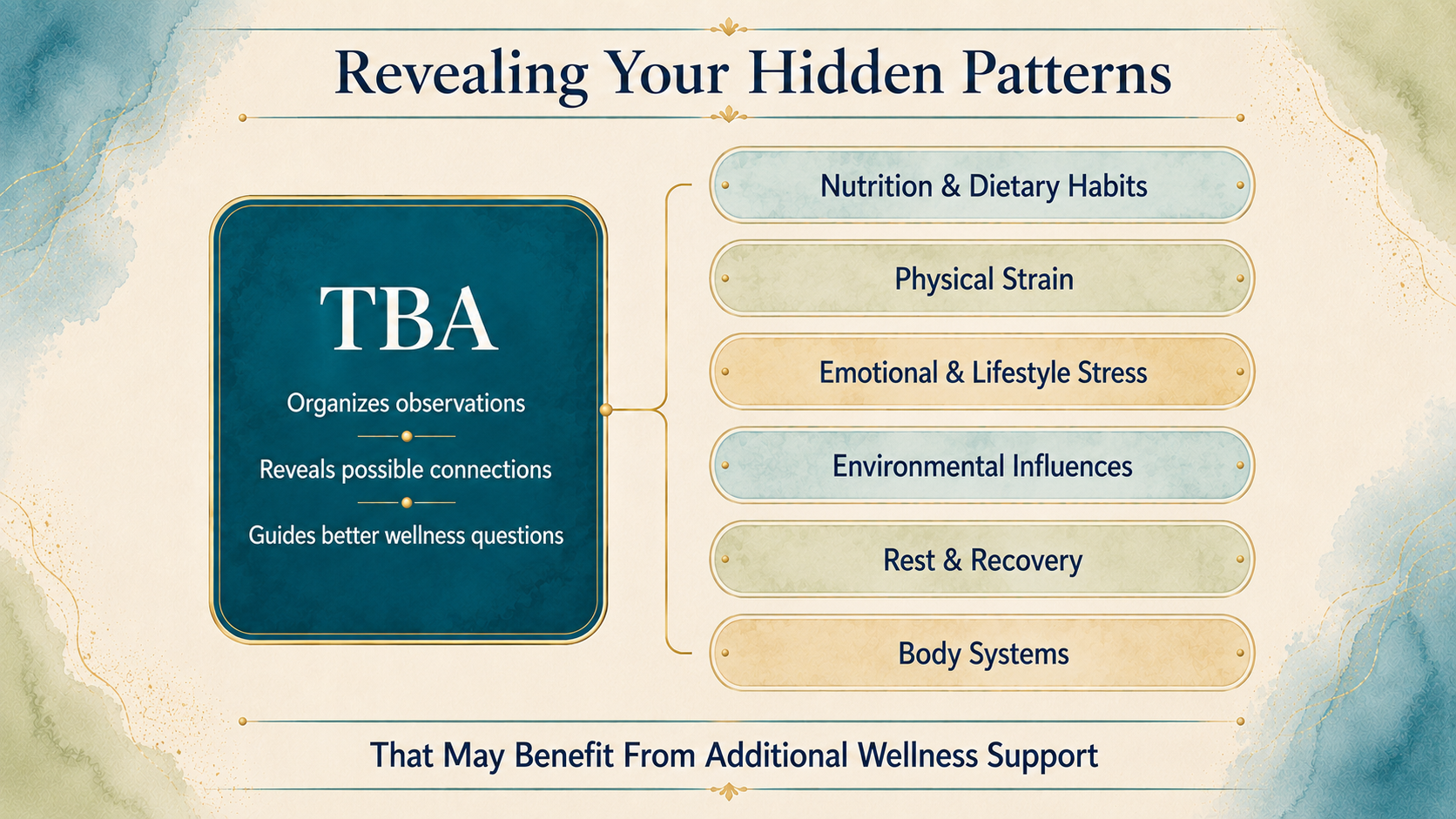
It’s important to remember TBA does not diagnose the cause of a symptom or confirm a disease, deficiency, infection, or other medical condition. Instead, it helps organize observations, reveal possible connections, and guide better wellness questions.
Establishing Your Personal Starting Point
The goal is not to address everything at once. Trying to make too many changes can quickly become overwhelming and make it difficult to know which steps are helping. Finding your starting point allows us to:
- Identify the areas that appear to deserve priority
- Consider which changes are practical for you
- Select appropriate educational and supportive resources
- Develop an individualized wellness program
- Revisit your progress and adjust the program when appropriate
This provides direction without imposing a one-size-fits-all plan. Your starting point is based on the information available, your individual circumstances, and the goals you want to work toward.
From Information to a Personal Direction
TBA helps us move from a collection of concerns toward a clearer sense of direction. It provides a starting point for deciding which healthy patterns may need support and which practical steps may be most appropriate to consider first. Once that starting point has been identified, the next step is helping you understand your options and put those ideas into practice.
Our journey now moves from finding your starting point to the personalized support that can help you move forward with greater understanding and confidence.