Cultivating a resilient life
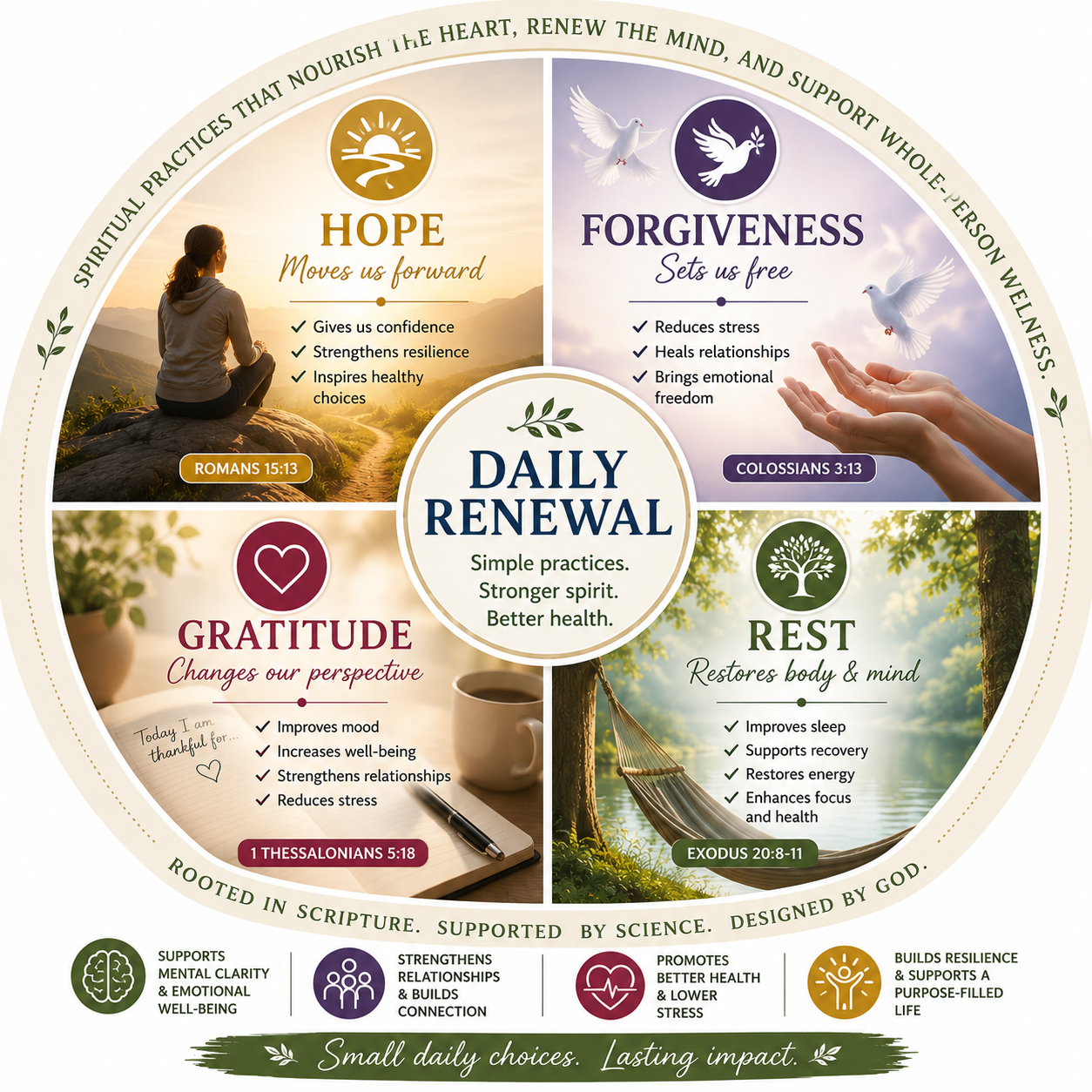
Life continually presents challenges, uncertainty, and change. Throughout Scripture, God provides practical ways to nurture the heart, renew the mind, and strengthen the spirit. Hope, forgiveness, gratitude, and rest are timeless practices that continue to benefit emotional well-being, healthy relationships, and resilience. Modern research increasingly supports what Scripture has long taught—that these simple, intentional practices can positively influence how we think, feel, and live.
Hope
Hope Changes Perspective- It gives us the confidence to move forward even when circumstances are difficult. Scripture presents hope as an anchor for the soul, encouraging perseverance and trust during life’s challenges. Research suggests that hopeful people often demonstrate greater resilience, healthier coping skills, and improved emotional well-being.
Key Thought-
Hope influences today’s choices, and today’s choices help shape tomorrow’s health.
Forgiveness
The Freedom to Let Go- does not excuse wrongdoing, but it can free us from the burden of carrying resentment. Scripture encourages forgiveness as a pathway toward healing relationships and experiencing peace. Research has linked forgiveness with lower stress, reduced anxiety, healthier relationships, and improved emotional well-being.
Key Thought:
Forgiveness often changes the person offering it as much as the person receiving it.
Gratitude
Choose Thankfulness- to shift your attention from what is missing to what has already been given. Scripture repeatedly encourages thankful living, and modern research suggests gratitude can improve mood, reduce stress, strengthen relationships, and increase overall life satisfaction.
Key Thought:
A thankful heart often sees possibilities where others see problems.
Rest
The Body is Designed to Rest- Long before modern medicine emphasized the importance of sleep and recovery, Scripture established rhythms of work and rest. Quality sleep, periods of quiet reflection, and regular times of renewal help restore both mind and body. Rest is not simply the absence of activity—it’s an intentional investment in long-term health.
Key Thought:
Rest is not a sign of weakness—it’s part of God’s design for renewal.
The 4 PIllars of Daily Renewal
Have supported people for thousands of years because they address timeless human needs. While science continues to uncover how they influence the brain, emotions, and physical health, Scripture has long recognized their value in helping us live with greater peace, resilience, and purpose.