

Our thoughts influence how we feel, how we respond to life’s challenges, and the choices we make each day. Long before neuroscience discovered the brain’s ability to adapt and form new neural pathways—a process known as neuroplasticity—Scripture encouraged us to renew our minds, focus on what is true and good, and take unhealthy thoughts captive. While science and faith approach this from different perspectives, both recognize that healthy thought patterns practiced consistently can help shape emotional habits, strengthen resilience, and support overall well-being.
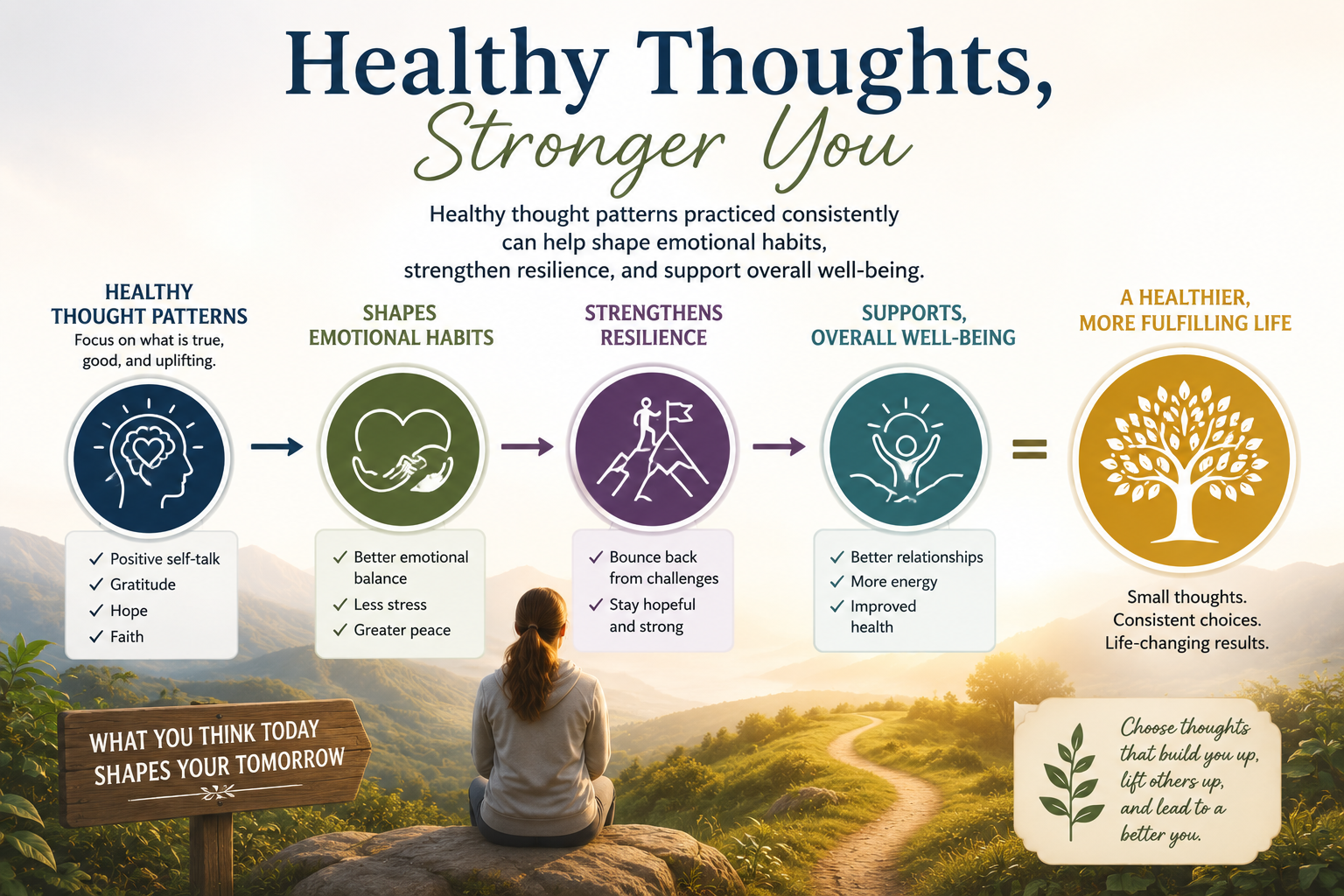
Choose one positive, life-giving thought today. Small changes in how we think can become meaningful steps toward a healthier mind and a renewed perspective.
Supporting Scriptures
Romans 12:2 “Be transformed by the renewing of your mind…”
Philippians 4:8 “Whatever is true, whatever is noble… think about such things.”
2 Corinthians 10:5 “Take every thought captive to make it obedient…”
What Research Says
Research in neuroscience suggests that the brain remains adaptable throughout life. Repeated thoughts, behaviors, and experiences strengthen neural pathways, while intentionally practicing healthier thought patterns can support emotional resilience and well-being. This process, known as neuroplasticity, helps explain why consistent habits—such as gratitude, mindfulness, learning, and positive cognitive practices—can influence how we think and respond over time.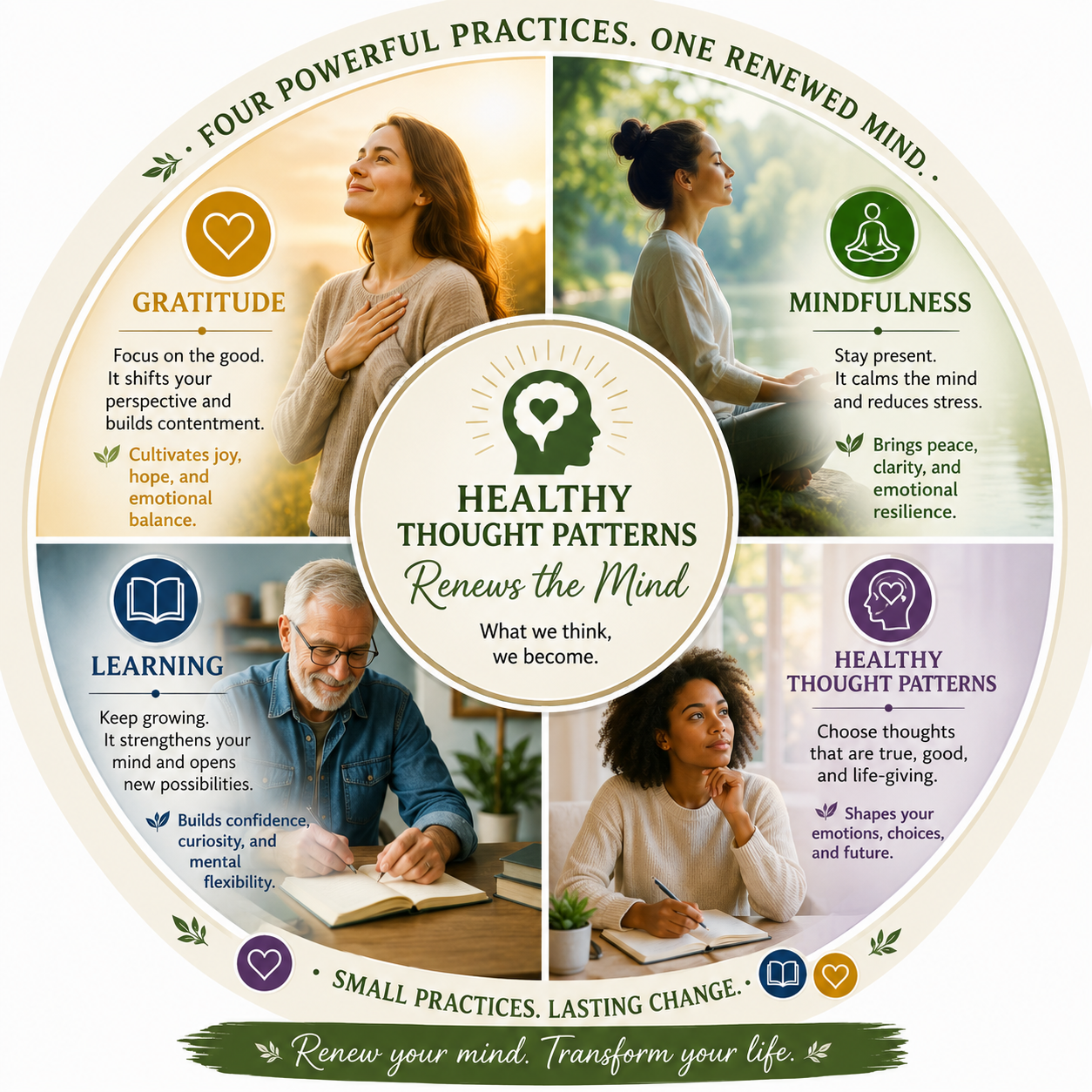
References
-
Doidge, N. (2007). The Brain That Changes Itself. Popularized decades of neuroscience demonstrating the brain's lifelong capacity to reorganize and form new neural connections.
-
Cramer, S. C., et al. (2011). Harnessing Neuroplasticity for Clinical Applications. Brain, 134(6), 1591–1609. This review summarizes evidence that the adult brain continually adapts in response to learning, experience, and repeated behaviors.
-
Davidson, R. J., & McEwen, B. S. (2012). Social Influences on Neuroplasticity: Stress and Interventions to Promote Well-Being. Nature Neuroscience, 15(5), 689–695. This review discusses how repeated mental practices can influence brain function and resilience.